

George Brown Polytechnic is located on the traditional territory of the Mississaugas of the Credit First Nation and other Indigenous peoples who have lived here over time. We are grateful to share this land as treaty people who learn, work and live in the community with each other.
Honours Bachelor of Commerce (Culinary Management)
(Culinary Management) (H315)
Program Details
- Program Code: H315
- Credential: Honours Bachelor's Degree
- Duration: 4 years (8 semesters)
- Method of Study: Full-time
- Starting Months: September
- Domestic Tuition: $11,600.00 * † ‡
- International Tuition: $25,816.00 ** † ‡
Program Availability
| Semester | Domestic | International |
|---|---|---|
| Fall 2027 | Open | Open |
| Winter 2028 | Not Available | Not Available |
| Spring 2028 | Not Available | Not Available |
- Work-Integrated Learning:
We believe in learning by doing, and that is why we have incorporated work-integrated learning opportunities.
- PGWP Eligible: Yes
- CIP Code: 52.0905
- Please note that field of study/CIP code is only one component of PGWP eligibility. Please consult the official IRCC PGWP eligibility webpage (opens in a new tab) for the most current and complete information.
Program Description
Leadership Claims
The only four-year Culinary Management Honours bachelor's degree in Canada.
Program Overview
This program is eligible for an entrance scholarship.
Develop the skills necessary to succeed as a chef, culinary manager or entrepreneur in the Honours Bachelor of Commerce (Culinary Management) program. Through a blend of theoretical and practical education, students will gain the skills and knowledge to achieve a successful career in today’s culinary and food industry. And you’ll gain real-world experience that employers value.
Full Description
As a graduate of the Honours Bachelor of Commerce (Culinary Management) (H315) program, you’ll enter the workforce with the culinary knowledge, advanced management skills and business acumen needed for a successful career in modern Canadian kitchens and food companies or as an entrepreneur. And you’ll gain real-world experience.
This program is Canada’s only four-year culinary management honours bachelor’s degree, and it prepares graduates for positions in kitchen operations, operations management, food development, or entrepreneurship. Students will gain an understanding of the following key areas:
- Culinary proficiency
- Culinary theory
- Accounting and finance
- Marketing and communications
- Human resources and risk management
- Specialized business
- Research
- General knowledge (liberal studies)
George Brown Polytechnic Chef School Student Standards and Expectations
Note: George Brown Polytechnic has adopted a Bring Your Own Device (BYOD) initiative. As a result, we no longer have computer lab classrooms. For classes that require computers, students will need to bring their own laptops. Our Library Learning Commons offers open access computers as well as equipment that can be borrowed on a short-term basis. For more information, please get in touch with chcastudentsupport@georgebrown.ca
Your Field Education Options
Take part in a unique and robust paid work placement. George Brown works with employers and industry partners to identify potential work experience opportunities. Students are also strongly encouraged to pursue self-directed industry work experience opportunities they believe will provide the learning experiences they value and meet the program's learning outcomes. This valuable work experience can in turn be added to your resumé.
In addition to more formal on-the-job work experience, George Brown Polytechnic strives to provide learning opportunities with real-world challenges and customers.
Career & Postgraduate Study Opportunities
Educational Pathways
Ministry Consent
George Brown Polytechnic has been granted a consent by the Minister of Colleges, Universities, Research Excellence and Security to offer this applied degree for a seven-year term starting September 29, 2023. The college shall ensure that all students admitted to the above-named program during the period of consent will have the opportunity to complete the program within a reasonable time frame.
Alumni Impact
We are immensely proud of the contributions of our alumni in Toronto and around the globe.
From Michelin-starred restaurants to major construction, entertainment, community and financial organizations, our graduates are truly making an impact across a range of industries.
Courses
Semester 1
| Code | Course Name |
|---|---|
| HOSF1146 | Emergency First Aid and Heartsaver CPR |
| HOSF1266 | Introduction to Restaurant Management |
| HOSF1267 | Culinary Skills I |
| HOSF1269 | Gastronomic Theory I |
| HOSF1275 | Business Communications |
| HOSF1317 | Sanitation |
| HOSF2305 | Food and Beverage Cost Control |
| HOST1179 | Smart Serve |
| LIBL | Lower Liberal Elective |
Semester 2
| Code | Course Name |
|---|---|
| HOSF1283 | Butchery and Cafe Production |
| HOSF1293 | Culinary Skills II |
| HOSF1295 | Gastronomic Theory II |
| HOSF1320 | Whmis |
| HOSF2312 | Introductory Food Studies |
| HOSF2406 | Principles of Marketing |
Co-op Placement
| Code | Course Name |
|---|---|
| HCOP1011 | Work Integrated Learning I (Wil): Culinary |
Semester 3
| Code | Course Name |
|---|---|
| HOSF1277 | Fundamentals of Accounting |
| HOSF2303 | Food for Special Events |
| HOSF2307 | Patisserie Production Management |
| HOSF2309 | Research Fundamentals |
| HOSF2311 | Catering and Menu Management |
| LIBL | Lower Liberal Elective |
Semester 4
| Code | Course Name |
|---|---|
| HOSF1299 | Managerial Accounting |
| HOSF2313 | Macroeconomic: Canada in the Global Environment |
| HOSF2402 | Essential Flavours of the Modern Kitchen |
| HOSF2404 | Concepts of Customer Service |
Semester 5
| Code | Course Name |
|---|---|
| HOSF3505 | Market and Feasibility Research I |
| HOSF3507 | Strategic Managerial Communications |
| HOSF3509 | Sustainability in Food Service |
| HOSF3604 | Finance |
| LIBL | Lower Liberal Elective |
| LIBL | Lower Liberal Elective |
Semester 6
| Code | Course Name |
|---|---|
| HOSF3501 | Human Resources Management |
| HOSF3603 | Market and Feasibility Research II |
| HOSF3605 | Statistics |
| HOSF3609 | Food Science and Nutrition |
| LIBU | Upper Liberal Elective |
Co-op Placement
| Code | Course Name |
|---|---|
| EXTN2011 | Work Integrated Learning II (Wil) : Personalized |
Semester 7
| Code | Course Name |
|---|---|
| HOSF4703 | Restaurant Risk Management |
| HOSF4705 | Beverages, Sensory and Evaluation |
| HOSF4707 | Advanced Food Science and Nutrition |
| HOSF4709 | Strategic Revenue Management |
| LIBU | Upper Liberal Elective |
Semester 8
| Code | Course Name |
|---|---|
| HOSF4805 | Research and Development |
| HOSF4806 | Strategies for the Black Box |
| HOSF4808 | Capstone |
| LIBU | Upper Liberal Elective |
Course Outline URL
Program Learning Outcomes
The graduate must maintain good standing with a minimum 2.3 program GPA (67 per cent or above). Graduates will have reliably demonstrated the ability to:
- Distinguish among and apply current practices from industry and scholarship relating to accounting, marketing, customer service, human resources, supply chain management, health and safety, costing and pricing, hospitality, and risk management.
- Identify, appraise and/or apply various methods, skills, tools and systems used in a variety of disciplines related to culinary practice and study.
- Research and analyze societal, environmental, cultural, economic, culinary and/or market demands at local, regional and international levels.
- Collaborate effectively as part of a diverse culinary management team in order to develop strategies to realize organizational objectives in a variety of food service environments.
- Drawing on fields of study and practice, develop and manage strategic partnerships, customer service and relationships.
- Plan and execute fundamental contemporary cooking techniques that reflect an advanced knowledge of food theory and practice, nutrition and professional systems used in the culinary industry.
- Use management theories and methodologies in order to provide recommendations for realizing organizational objectives specific to different kinds of culinary operations.
- Develop a new food product, business and/or event, in order to facilitate market realization.
- Apply advanced management techniques and theories to support large-scale, multi-unit culinary operations.
- Monitor changing practices and evolving knowledge related to culinary management to select strategies for lifelong learning and professional advancement in the field of study.
- Examine personal strengths, weaknesses, and knowledge limitations in order to develop strategies that promote growth and build leadership potential.
- Communicate information and concepts using advanced verbal and written skills that reflect disciplinary norms.
- Use qualitative and/or quantitative information to develop cogent arguments, make sound judgments and apply concepts, principles and techniques that inform or enhance diverse types of culinary operations.
Tuition & Fees
Domestic Tuition
$11,600.00 * † ‡
International Tuition
$25,816.00 ** † ‡
Additional Costs
*Amounts listed are the estimated total of tuition, materials, student service and ancillary fees for the first two semesters of programs starting in fall 2026. Fees are subject to change for programs starting in fall 2027 and at later dates. This fee does not include books, E-text and other material, which are to be purchased by the student separately.
** Amounts listed are the estimated total of tuition, materials, student service and ancillary fees for the first two semesters of programs starting in Fall 2026. Fees are subject to change for programs starting in fall 2027 and at later dates. This fee does not include books, E-text and other material, which are to be purchased by the student separately.
† Fees for this program do not include the cost of the co-op work terms (HCOP 1011, between semesters 2 and 3, and EXTN 2011, between semesters 6 and 7), which is approximately $500 each.
‡ Additional Cost
| Description | Cost |
|---|---|
| Small wares | $100–$300 |
| Books | $500–$1,000 per year |
Note: Semester 1 tuition fees include the cost of a culinary kit, safety shoes, and Chef School uniform.
Please view the following for a detailed list of what is contained in the culinary kit:
International Students
Visit the International Fees and Related Costs page for more information.
Financial Assistance
Each year we award over $2 million dollars in scholarships, awards and bursaries to first-year students. Check out our financial aid web pages for ways to pay for college and the full list of available scholarships, awards and bursaries.
This program is approved for OSAP funding, provided the applicant meets OSAP eligibility criteria.
Admission Requirements
Applicants are selected based on their academic achievement, including the required courses, and on any other selection criteria outlined below.
- Ontario Secondary School Diploma with six grade 12 university (U) or university/college (M) courses, or equivalent, including: grade 12 (U) English and any grade 12 (U) Mathematics.
- a grade of 60 percent or higher in English and Math
- an overall average of 65 percent in six grade 12 (U) or (M) courses.
- recommended courses: basic computer software applications.
or
Mature student status (19 years of age or older and no OSSD)**:
- grade 12 (U) English
- grade 12 (U) Mathematics
- a grade of 65 percent or higher is required in English and Math
- post-secondary courses in English and Mathematics will be considered (certain courses only)
** There is no mature student testing in the required credits for degree programs. Mature applicants must have the English and Math credits required. Additional information about where and how to upgrade is available on the English and Math upgrading pages.
Please note that George Brown is committed to ensuring that applicants will succeed in their program of choice, and meeting the minimum requirements does not guarantee admission to the program. Applicants may be required to have grades above the stated minimum requirements.
English language proficiency
George Brown ESL Level 9; TOEFL 84 overall and 21 in each skill band (online); IELTS 6.5 overall and 6.0 in each skill band; MELAB 85; CAEL overall 70 (writing 60).
Proficiency in English communication is necessary for success in this program.
Please visit English Proficiency page for more details.
International Students
Visit the International Admissions page for more information regarding country specific admission requirements.
Health Policy
Students should be aware that various allergens, including nuts, dairy and shellfish, are routinely used in practical labs. Students should also note that George Brown Polytechnic is sensitive to religious observances; however, while products purchased for production and consumption meet all provincial and federal regulations, they may not meet specific dietary laws related to halal and kosher foods.
How to Apply
Domestic students should apply through Ontario Colleges.
International Students
Visit the How to Apply page for more information on how and when to apply.
International students should apply through the George Brown Polytechnic Online Application System.
Contact Us
Honours Bachelor of Commerce (H315)
For general Chef School inquiries, please contact CHCAStudentSupport@georgebrown.ca.
International Students
Contact one of our international recruitment representatives specializing by country of origin by either booking a virtual meeting or submitting an inquiry. For more information visit the International Contact Us page
Visit Our Campus
Join us for an upcoming Open House Discovery Day, where you will learn more about your area of interest, get a first-hand look at our facilities and meet with representatives from George Brown Polytechnic.
Program Description
Leadership Claims
The only four-year Culinary Management Honours bachelor's degree in Canada.
Program Overview
This program is eligible for an entrance scholarship.
Develop the skills necessary to succeed as a chef, culinary manager or entrepreneur in the Honours Bachelor of Commerce (Culinary Management) program. Through a blend of theoretical and practical education, students will gain the skills and knowledge to achieve a successful career in today’s culinary and food industry. And you’ll gain real-world experience that employers value.
Full Description
As a graduate of the Honours Bachelor of Commerce (Culinary Management) (H315) program, you’ll enter the workforce with the culinary knowledge, advanced management skills and business acumen needed for a successful career in modern Canadian kitchens and food companies or as an entrepreneur. And you’ll gain real-world experience.
This program is Canada’s only four-year culinary management honours bachelor’s degree, and it prepares graduates for positions in kitchen operations, operations management, food development, or entrepreneurship. Students will gain an understanding of the following key areas:
- Culinary proficiency
- Culinary theory
- Accounting and finance
- Marketing and communications
- Human resources and risk management
- Specialized business
- Research
- General knowledge (liberal studies)
George Brown Polytechnic Chef School Student Standards and Expectations
Note: George Brown Polytechnic has adopted a Bring Your Own Device (BYOD) initiative. As a result, we no longer have computer lab classrooms. For classes that require computers, students will need to bring their own laptops. Our Library Learning Commons offers open access computers as well as equipment that can be borrowed on a short-term basis. For more information, please get in touch with chcastudentsupport@georgebrown.ca
Your Field Education Options
Take part in a unique and robust paid work placement. George Brown works with employers and industry partners to identify potential work experience opportunities. Students are also strongly encouraged to pursue self-directed industry work experience opportunities they believe will provide the learning experiences they value and meet the program's learning outcomes. This valuable work experience can in turn be added to your resumé.
In addition to more formal on-the-job work experience, George Brown Polytechnic strives to provide learning opportunities with real-world challenges and customers.
Career & Postgraduate Study Opportunities
Educational Pathways
Ministry Consent
George Brown Polytechnic has been granted a consent by the Minister of Colleges, Universities, Research Excellence and Security to offer this applied degree for a seven-year term starting September 29, 2023. The college shall ensure that all students admitted to the above-named program during the period of consent will have the opportunity to complete the program within a reasonable time frame.
Courses
Semester 1
| Code | Course Name |
|---|---|
| HOSF1146 | Emergency First Aid and Heartsaver CPR |
| HOSF1266 | Introduction to Restaurant Management |
| HOSF1267 | Culinary Skills I |
| HOSF1269 | Gastronomic Theory I |
| HOSF1275 | Business Communications |
| HOSF1317 | Sanitation |
| HOSF2305 | Food and Beverage Cost Control |
| HOST1179 | Smart Serve |
| LIBL | Lower Liberal Elective |
Semester 2
| Code | Course Name |
|---|---|
| HOSF1283 | Butchery and Cafe Production |
| HOSF1293 | Culinary Skills II |
| HOSF1295 | Gastronomic Theory II |
| HOSF1320 | Whmis |
| HOSF2312 | Introductory Food Studies |
| HOSF2406 | Principles of Marketing |
Co-op Placement
| Code | Course Name |
|---|---|
| HCOP1011 | Work Integrated Learning I (Wil): Culinary |
Semester 3
| Code | Course Name |
|---|---|
| HOSF1277 | Fundamentals of Accounting |
| HOSF2303 | Food for Special Events |
| HOSF2307 | Patisserie Production Management |
| HOSF2309 | Research Fundamentals |
| HOSF2311 | Catering and Menu Management |
| LIBL | Lower Liberal Elective |
Semester 4
| Code | Course Name |
|---|---|
| HOSF1299 | Managerial Accounting |
| HOSF2313 | Macroeconomic: Canada in the Global Environment |
| HOSF2402 | Essential Flavours of the Modern Kitchen |
| HOSF2404 | Concepts of Customer Service |
Semester 5
| Code | Course Name |
|---|---|
| HOSF3505 | Market and Feasibility Research I |
| HOSF3507 | Strategic Managerial Communications |
| HOSF3509 | Sustainability in Food Service |
| HOSF3604 | Finance |
| LIBL | Lower Liberal Elective |
| LIBL | Lower Liberal Elective |
Semester 6
| Code | Course Name |
|---|---|
| HOSF3501 | Human Resources Management |
| HOSF3603 | Market and Feasibility Research II |
| HOSF3605 | Statistics |
| HOSF3609 | Food Science and Nutrition |
| LIBU | Upper Liberal Elective |
Co-op Placement
| Code | Course Name |
|---|---|
| EXTN2011 | Work Integrated Learning II (Wil) : Personalized |
Semester 7
| Code | Course Name |
|---|---|
| HOSF4703 | Restaurant Risk Management |
| HOSF4705 | Beverages, Sensory and Evaluation |
| HOSF4707 | Advanced Food Science and Nutrition |
| HOSF4709 | Strategic Revenue Management |
| LIBU | Upper Liberal Elective |
Semester 8
| Code | Course Name |
|---|---|
| HOSF4805 | Research and Development |
| HOSF4806 | Strategies for the Black Box |
| HOSF4808 | Capstone |
| LIBU | Upper Liberal Elective |
Course Outline URL
Tuition & Fees
Domestic Tuition
$11,600.00 * † ‡
International Tuition
$25,816.00 ** † ‡
Additional Costs
*Amounts listed are the estimated total of tuition, materials, student service and ancillary fees for the first two semesters of programs starting in fall 2026. Fees are subject to change for programs starting in fall 2027 and at later dates. This fee does not include books, E-text and other material, which are to be purchased by the student separately.
** Amounts listed are the estimated total of tuition, materials, student service and ancillary fees for the first two semesters of programs starting in Fall 2026. Fees are subject to change for programs starting in fall 2027 and at later dates. This fee does not include books, E-text and other material, which are to be purchased by the student separately.
† Fees for this program do not include the cost of the co-op work terms (HCOP 1011, between semesters 2 and 3, and EXTN 2011, between semesters 6 and 7), which is approximately $500 each.
‡ Additional Cost
| Description | Cost |
|---|---|
| Small wares | $100–$300 |
| Books | $500–$1,000 per year |
Note: Semester 1 tuition fees include the cost of a culinary kit, safety shoes, and Chef School uniform.
Please view the following for a detailed list of what is contained in the culinary kit:
International Students
Visit the International Fees and Related Costs page for more information.
Financial Assistance
Each year we award over $2 million dollars in scholarships, awards and bursaries to first-year students. Check out our financial aid web pages for ways to pay for college and the full list of available scholarships, awards and bursaries.
This program is approved for OSAP funding, provided the applicant meets OSAP eligibility criteria.
Admission Requirements
Applicants are selected based on their academic achievement, including the required courses, and on any other selection criteria outlined below.
- Ontario Secondary School Diploma with six grade 12 university (U) or university/college (M) courses, or equivalent, including: grade 12 (U) English and any grade 12 (U) Mathematics.
- a grade of 60 percent or higher in English and Math
- an overall average of 65 percent in six grade 12 (U) or (M) courses.
- recommended courses: basic computer software applications.
or
Mature student status (19 years of age or older and no OSSD)**:
- grade 12 (U) English
- grade 12 (U) Mathematics
- a grade of 65 percent or higher is required in English and Math
- post-secondary courses in English and Mathematics will be considered (certain courses only)
** There is no mature student testing in the required credits for degree programs. Mature applicants must have the English and Math credits required. Additional information about where and how to upgrade is available on the English and Math upgrading pages.
Please note that George Brown is committed to ensuring that applicants will succeed in their program of choice, and meeting the minimum requirements does not guarantee admission to the program. Applicants may be required to have grades above the stated minimum requirements.
English language proficiency
George Brown ESL Level 9; TOEFL 84 overall and 21 in each skill band (online); IELTS 6.5 overall and 6.0 in each skill band; MELAB 85; CAEL overall 70 (writing 60).
Proficiency in English communication is necessary for success in this program.
Please visit English Proficiency page for more details.
International Students
Visit the International Admissions page for more information regarding country specific admission requirements.
Health Policy
Students should be aware that various allergens, including nuts, dairy and shellfish, are routinely used in practical labs. Students should also note that George Brown Polytechnic is sensitive to religious observances; however, while products purchased for production and consumption meet all provincial and federal regulations, they may not meet specific dietary laws related to halal and kosher foods.
How to Apply
Domestic students should apply through Ontario Colleges.
International Students
Visit the How to Apply page for more information on how and when to apply.
International students should apply through the George Brown Polytechnic Online Application System.
Program Learning Outcomes
The graduate must maintain good standing with a minimum 2.3 program GPA (67 per cent or above). Graduates will have reliably demonstrated the ability to:
- Distinguish among and apply current practices from industry and scholarship relating to accounting, marketing, customer service, human resources, supply chain management, health and safety, costing and pricing, hospitality, and risk management.
- Identify, appraise and/or apply various methods, skills, tools and systems used in a variety of disciplines related to culinary practice and study.
- Research and analyze societal, environmental, cultural, economic, culinary and/or market demands at local, regional and international levels.
- Collaborate effectively as part of a diverse culinary management team in order to develop strategies to realize organizational objectives in a variety of food service environments.
- Drawing on fields of study and practice, develop and manage strategic partnerships, customer service and relationships.
- Plan and execute fundamental contemporary cooking techniques that reflect an advanced knowledge of food theory and practice, nutrition and professional systems used in the culinary industry.
- Use management theories and methodologies in order to provide recommendations for realizing organizational objectives specific to different kinds of culinary operations.
- Develop a new food product, business and/or event, in order to facilitate market realization.
- Apply advanced management techniques and theories to support large-scale, multi-unit culinary operations.
- Monitor changing practices and evolving knowledge related to culinary management to select strategies for lifelong learning and professional advancement in the field of study.
- Examine personal strengths, weaknesses, and knowledge limitations in order to develop strategies that promote growth and build leadership potential.
- Communicate information and concepts using advanced verbal and written skills that reflect disciplinary norms.
- Use qualitative and/or quantitative information to develop cogent arguments, make sound judgments and apply concepts, principles and techniques that inform or enhance diverse types of culinary operations.
Contact Us
Honours Bachelor of Commerce (H315)
For general Chef School inquiries, please contact CHCAStudentSupport@georgebrown.ca.
International Students
Contact one of our international recruitment representatives specializing by country of origin by either booking a virtual meeting or submitting an inquiry. For more information visit the International Contact Us page
Visit Our Campus
Join us for an upcoming Open House Discovery Day, where you will learn more about your area of interest, get a first-hand look at our facilities and meet with representatives from George Brown Polytechnic.

Visit St. James Campus
Book campus tour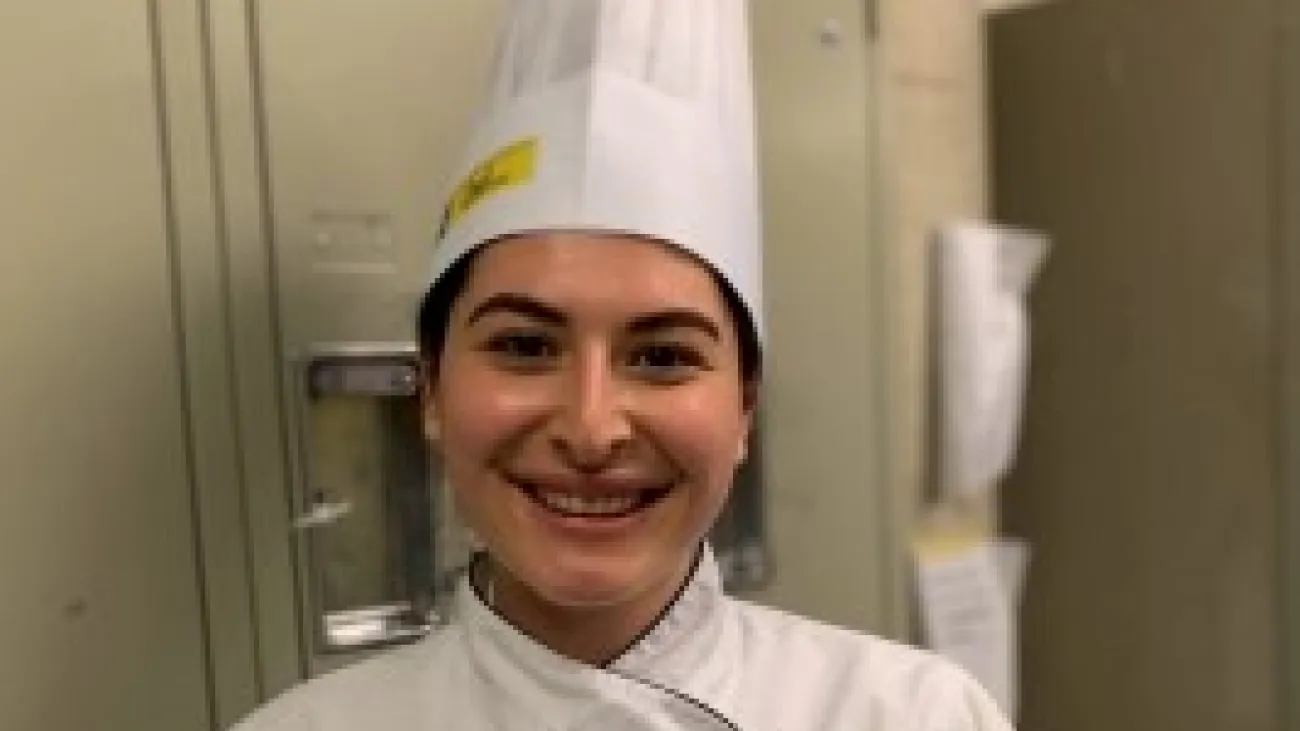
The Honours Bachelor of Commerce (Culinary Management) program is the perfect balance of management and culinary skills. This four-year program prepared us for the industry so we could become strong leaders and skilled individuals. The way the program is built allowed us to create a strong foundation for the advanced courses we had throughout the years. We were able to learn every aspect of the hospitality industry not just the restaurant industry in these four- years. In the future, this will give the graduates a very flexible choice on their career path. The quality and academic levels of this program are of a very high standard, making this degree worth it. The knowledge of the professors and chefs we had in this program helped me to excel in my academic and culinary skills. The small class sizes were great because they allowed us to have a first-person connection to our professors. They all guided us and gave us extra help whenever we needed it. My favourite aspect of this program was the evolution it went through. From real-life case studies to the opportunity to create a business plan, we were always connected to the industry. The guest speakers we had in our courses helped us to get an insight into the industry we would be a part of. Even in our management classes, we were doing hands-on work like creating a business plan or solving current issues in our industry. Every year we knew what was happening in the industry, from sustainability to laws, to the cost of equipment. This connection became stronger when we had our externships in the first year and third year. When we came back from these externships, we were able to connect to our courses even more with the experience we gained in the real world. After graduating from this program, I feel ready and confident with the skillset and knowledge I gained. I am proud to be in the first group of graduates this program will have and I will always be grateful to all my professors for their constant support and guidance in our four-year journey.
Yasemin Gencay
Honours Bachelor's Degree
George BrOWN Your Tomorrow! Join our mailing list for important dates, program updates, future student events, helpful tips and more.
Visit
Our Virtual Tour showcases the following areas:
- Campus Facilities
- Student Services
- Applied Learning Environments
- Labs & Classrooms
Honours Bachelor of Commerce (Culinary Management)
(Culinary Management) (H315)
Program Details
- Program Code: H315
- Credential: Honours Bachelor's Degree
- Duration: 4 years (8 semesters)
- Method of Study: Full-time
- Starting Months: September
- Domestic Tuition: $11,183.00 * † ‡
- International Tuition: $25,590.00 ** † ‡
- Fall 2026 Delivery: Semester 1, 3, 5, 7: Hybrid
- Winter 2027 Delivery: Semester 2, 4, 6, 8: Hybrid
Program Availability
| Semester | Domestic | International |
|---|---|---|
| Fall 2026 | Closed | Closed |
| Winter 2027 | Not Available | Not Available |
| Spring 2027 | Not Available | Not Available |
- Work-Integrated Learning:
We believe in learning by doing, and that is why we have incorporated work-integrated learning opportunities.
- PGWP Eligible: Yes
- CIP Code: 52.0905
- Please note that field of study/CIP code is only one component of PGWP eligibility. Please consult the official IRCC PGWP eligibility webpage (opens in a new tab) for the most current and complete information.
Get answers to your questions
Book info sessionProgram Description
Leadership Claims
The only four-year Culinary Management Honours bachelor's degree in Canada.
Program Overview
This program is eligible for an entrance scholarship.
Develop the skills necessary to succeed as a chef, culinary manager or entrepreneur in the Honours Bachelor of Commerce (Culinary Management) program. Through a blend of theoretical and practical education, students will gain the skills and knowledge to achieve a successful career in today’s culinary and food industry. And you’ll gain real-world experience valued by employers.
Full Description
As a graduate of the Honours Bachelor of Commerce (Culinary Management) (H315) program, you’ll enter the workforce with the culinary knowledge, advanced management skills and business acumen needed for a successful career in modern Canadian kitchens and food companies or as an entrepreneur. And you’ll gain real-world experience.
This program is Canada’s only four-year culinary management honours bachelor’s degree, and it prepares graduates for kitchen, operations management, food development or entrepreneur positions. Students will gain an understanding of the following key areas:
- Culinary proficiency
- Culinary theory
- Accounting and finance
- Marketing and communications
- Human resources and risk management
- Specialized business
- Research
- General knowledge (liberal studies)
George Brown Polytechnic Chef School Student Standards and Expectations
Note: George Brown Polytechnic has adopted a Bring Your Own Device (BYOD) initiative. As a result, we no longer have computer lab classrooms. For classes that require computers, students will need to bring their own laptops. Our Library Learning Commons offers open access computers as well as equipment that can be borrowed on a short-term basis. For more information, please contact The Centre for Hospitality and Culinary Arts at chcastudentsupport@georgebrown.ca
Your Field Education Options
Take part in a unique and robust paid work placement. George Brown works with employers and industry partners to identify potential work experience opportunities. Students are also strongly encouraged to pursue self-directed industry work experience opportunities they believe will provide the learning experiences they value and meet the program's learning outcomes. This valuable work experience can in turn be added to your resumé.
In addition to more formal on-the-job work experience, George Brown Polytechnic strives to provide learning opportunities with real-world challenges and customers.
Career & Postgraduate Study Opportunities
Educational Pathways
Graduates of this program will be prepared to continue their studies post-degree in master’s programs in the fields of business, gastronomy and environmental studies.
Graduates may also be eligible for direct entry into the Culinary Arts – Italian, French Pastry programs, as well as the Food and Nutrition Management program.
Please contact the program co-ordinator for further information.
Ministry Consent
George Brown Polytechnic has been granted a consent by the Minister of Colleges, Universities, Research Excellence and Security to offer this applied degree for a seven-year term starting September 29, 2023. The college shall ensure that all students admitted to the above-named program during the period of consent will have the opportunity to complete the program within a reasonable time frame.
Alumni Impact
We are immensely proud of the contributions of our alumni in Toronto and around the globe.
From Michelin-starred restaurants to major construction, entertainment, community and financial organizations, our graduates are truly making an impact across a range of industries.
Courses
Semester 1
| Code | Course Name |
|---|---|
| HOSF1146 | Emergency First Aid and Heartsaver CPR |
| HOSF1266 | Introduction to Restaurant Management |
| HOSF1267 | Culinary Skills I |
| HOSF1269 | Gastronomic Theory I |
| HOSF1275 | Business Communications |
| HOSF1317 | Sanitation |
| HOSF2305 | Food and Beverage Cost Control |
| HOST1179 | Smart Serve |
| LIBL | Lower Liberal Elective |
Semester 2
| Code | Course Name |
|---|---|
| HOSF1283 | Butchery and Cafe Production |
| HOSF1293 | Culinary Skills II |
| HOSF1295 | Gastronomic Theory II |
| HOSF1320 | Whmis |
| HOSF2312 | Introductory Food Studies |
| HOSF2406 | Principles of Marketing |
Co-op Placement
| Code | Course Name |
|---|---|
| HCOP1011 | Work Integrated Learning I (Wil): Culinary |
Semester 3
| Code | Course Name |
|---|---|
| HOSF1277 | Fundamentals of Accounting |
| HOSF2303 | Food for Special Events |
| HOSF2307 | Patisserie Production Management |
| HOSF2309 | Research Fundamentals |
| HOSF2311 | Catering and Menu Management |
| LIBL | Lower Liberal Elective |
Semester 4
| Code | Course Name |
|---|---|
| HOSF1299 | Managerial Accounting |
| HOSF2313 | Macroeconomic: Canada in the Global Environment |
| HOSF2402 | Essential Flavours of the Modern Kitchen |
| HOSF2404 | Concepts of Customer Service |
Semester 5
| Code | Course Name |
|---|---|
| HOSF3505 | Market and Feasibility Research I |
| HOSF3507 | Strategic Managerial Communications |
| HOSF3509 | Sustainability in Food Service |
| HOSF3604 | Finance |
| LIBL | Lower Liberal Elective |
| LIBL | Lower Liberal Elective |
Semester 6
| Code | Course Name |
|---|---|
| HOSF3501 | Human Resources Management |
| HOSF3603 | Market and Feasibility Research II |
| HOSF3605 | Statistics |
| HOSF3609 | Food Science and Nutrition |
| LIBU | Upper Liberal Elective |
Co-op Placement
| Code | Course Name |
|---|---|
| EXTN2011 | Work Integrated Learning II (Wil) : Personalized |
Semester 7
| Code | Course Name |
|---|---|
| HOSF4703 | Restaurant Risk Management |
| HOSF4705 | Beverages, Sensory and Evaluation |
| HOSF4707 | Advanced Food Science and Nutrition |
| HOSF4709 | Strategic Revenue Management |
| LIBU | Upper Liberal Elective |
Semester 8
| Code | Course Name |
|---|---|
| HOSF4805 | Research and Development |
| HOSF4806 | Strategies for the Black Box |
| HOSF4808 | Capstone |
| LIBU | Upper Liberal Elective |
Course Outline URL
Program Learning Outcomes
The graduate must maintain good standing with a minimum 2.3 program GPA (67 per cent or above). Graduates will have reliably demonstrated the ability to:
- Distinguish among and apply current practices from industry and scholarship relating to accounting, marketing, customer service, human resources, supply chain management, health and safety, costing and pricing, hospitality, and risk management.
- Identify, appraise and/or apply various methods, skills, tools and systems used in a variety of disciplines related to culinary practice and study.
- Research and analyze societal, environmental, cultural, economic, culinary and/or market demands at local, regional and international levels.
- Collaborate effectively as part of a diverse culinary management team in order to develop strategies to realize organizational objectives in a variety of food service environments.
- Drawing on fields of study and practice, develop and manage strategic partnerships, customer service and relationships.
- Plan and execute fundamental contemporary cooking techniques that reflect an advanced knowledge of food theory and practice, nutrition and professional systems used in the culinary industry.
- Use management theories and methodologies in order to provide recommendations for realizing organizational objectives specific to different kinds of culinary operations.
- Develop a new food product, business and/or event, in order to facilitate market realization.
- Apply advanced management techniques and theories to support large-scale, multi-unit culinary operations.
- Monitor changing practices and evolving knowledge related to culinary management to select strategies for lifelong learning and professional advancement in the field of study.
- Examine personal strengths, weaknesses, and knowledge limitations in order to develop strategies that promote growth and build leadership potential.
- Communicate information and concepts using advanced verbal and written skills that reflect disciplinary norms.
- Use qualitative and/or quantitative information to develop cogent arguments, make sound judgments and apply concepts, principles and techniques that inform or enhance diverse types of culinary operations.
Tuition & Fees
Domestic Tuition
$11,183.00 * † ‡
International Tuition
$25,590.00 ** † ‡
Additional Costs
*Amounts listed are the estimated total of tuition, materials, student service and ancillary fees for the first two semesters of programs starting in fall 2025. Fees are subject to change for programs starting in fall 2026 and at later dates. This fee does not include books, which are to be purchased by the student separately.
** Amounts listed are the estimated total of tuition, materials, student service and ancillary fees for the first two semesters of programs starting in Fall 2026. Tuition fees are subject to board approval. Material, student service and ancillary fees are estimated based on prior years. All fees are subject to change without notice. This fee does not include books, which are to be purchased by the student separately.
† Fees for this program do not include the cost of the co-op work terms (HCOP 1011, between semesters 2 and 3, and EXTN 2011, between semesters 6 and 7), which is approximately $500 each.
‡ Additional Cost
| Description | Cost |
|---|---|
| Small wares | $100–$300 |
| Books | $500–$1,000 per year |
Note: Semester 1 tuition fees include the cost of a culinary kit, safety shoes, and Chef School uniform.
Please view the following for a detailed list of what is contained in the culinary kit:
International Students
Visit the International Fees and Related Costs page for more information.
Financial Assistance
Each year we award over $2 million dollars in scholarships, awards and bursaries to first-year students. Check out our financial aid web pages for ways to pay for college and the full list of available scholarships, awards and bursaries.
This program is approved for OSAP funding, provided the applicant meets OSAP eligibility criteria.
Admission Requirements
Applicants are selected on the basis of their academic achievement, including the required courses, and any other selection criteria outlined below.
- Ontario Secondary School Diploma with six grade 12 university (U) or university/college (M) courses, or equivalent, including: grade 12 (U) English and any grade 12 (U) Mathematics.
- a grade of 60 per cent or higher in English and Math
- an overall average of 65 per cent in six grade 12 (U) or (M) courses.
- recommended courses: basic computer software applications.
OR
Mature student status (19 years of age or older and no OSSD)**:
- grade 12 (U) English
- grade 12 (U) Mathematics
- a grade of 65 per cent or higher is required in English and Math
- post-secondary courses in English and Mathematics will be considered (certain courses only)
** There is no mature student testing in the required credits for degree programs. Mature applicants must have the English and Math credits required. Additional information on where and how to upgrade can be found on the English and Math upgrading pages.
Please note that George Brown is committed to ensuring that applicants will succeed in their program of choice and meeting the minimum requirements does not guarantee admission to the program. Applicants may be required to have grades higher than the minimum requirements stated.
English language proficiency
George Brown ESL Level 9; TOEFL 84 overall and 21 in each skill band (online); IELTS 6.5 overall and 6.0 in each skill band; MELAB 85; CAEL overall 70 (writing 60).
Proficiency in English communication is necessary for success in this program.
Please visit English Proficiency page for more details.
International Students
Visit the International Admissions page for more information regarding country specific admission requirements.
Health Policy
Students should be aware that various allergens, including nuts, dairy and shellfish, are routinely used in practical labs. Students should also note that George Brown Polytechnic is sensitive to religious observances; however, while products purchased for production and consumption meet all provincial and federal regulations, they may not meet specific dietary laws related to halal and kosher foods.
How to Apply
Domestic students should apply through Ontario Colleges.
International Students
Visit the How to Apply page for more information on how and when to apply.
International students should apply through the George Brown Polytechnic Online Application System.
Contact Us
Honours Bachelor of Commerce (H315)
For general Chef School inquiries, please contact CHCAStudentSupport@georgebrown.ca.
International Students
Contact one of our international recruitment representatives specializing by country of origin by either booking a virtual meeting or submitting an inquiry. For more information visit the International Contact Us page
Visit Our Campus
Join us for an upcoming Open House Discovery Day, where you will learn more about your area of interest, get a first-hand look at our facilities and meet with representatives from George Brown Polytechnic.
Program Description
Leadership Claims
The only four-year Culinary Management Honours bachelor's degree in Canada.
Program Overview
This program is eligible for an entrance scholarship.
Develop the skills necessary to succeed as a chef, culinary manager or entrepreneur in the Honours Bachelor of Commerce (Culinary Management) program. Through a blend of theoretical and practical education, students will gain the skills and knowledge to achieve a successful career in today’s culinary and food industry. And you’ll gain real-world experience valued by employers.
Full Description
As a graduate of the Honours Bachelor of Commerce (Culinary Management) (H315) program, you’ll enter the workforce with the culinary knowledge, advanced management skills and business acumen needed for a successful career in modern Canadian kitchens and food companies or as an entrepreneur. And you’ll gain real-world experience.
This program is Canada’s only four-year culinary management honours bachelor’s degree, and it prepares graduates for kitchen, operations management, food development or entrepreneur positions. Students will gain an understanding of the following key areas:
- Culinary proficiency
- Culinary theory
- Accounting and finance
- Marketing and communications
- Human resources and risk management
- Specialized business
- Research
- General knowledge (liberal studies)
George Brown Polytechnic Chef School Student Standards and Expectations
Note: George Brown Polytechnic has adopted a Bring Your Own Device (BYOD) initiative. As a result, we no longer have computer lab classrooms. For classes that require computers, students will need to bring their own laptops. Our Library Learning Commons offers open access computers as well as equipment that can be borrowed on a short-term basis. For more information, please contact The Centre for Hospitality and Culinary Arts at chcastudentsupport@georgebrown.ca
Your Field Education Options
Take part in a unique and robust paid work placement. George Brown works with employers and industry partners to identify potential work experience opportunities. Students are also strongly encouraged to pursue self-directed industry work experience opportunities they believe will provide the learning experiences they value and meet the program's learning outcomes. This valuable work experience can in turn be added to your resumé.
In addition to more formal on-the-job work experience, George Brown Polytechnic strives to provide learning opportunities with real-world challenges and customers.
Career & Postgraduate Study Opportunities
Educational Pathways
Graduates of this program will be prepared to continue their studies post-degree in master’s programs in the fields of business, gastronomy and environmental studies.
Graduates may also be eligible for direct entry into the Culinary Arts – Italian, French Pastry programs, as well as the Food and Nutrition Management program.
Please contact the program co-ordinator for further information.
Ministry Consent
George Brown Polytechnic has been granted a consent by the Minister of Colleges, Universities, Research Excellence and Security to offer this applied degree for a seven-year term starting September 29, 2023. The college shall ensure that all students admitted to the above-named program during the period of consent will have the opportunity to complete the program within a reasonable time frame.
Courses
Semester 1
| Code | Course Name |
|---|---|
| HOSF1146 | Emergency First Aid and Heartsaver CPR |
| HOSF1266 | Introduction to Restaurant Management |
| HOSF1267 | Culinary Skills I |
| HOSF1269 | Gastronomic Theory I |
| HOSF1275 | Business Communications |
| HOSF1317 | Sanitation |
| HOSF2305 | Food and Beverage Cost Control |
| HOST1179 | Smart Serve |
| LIBL | Lower Liberal Elective |
Semester 2
| Code | Course Name |
|---|---|
| HOSF1283 | Butchery and Cafe Production |
| HOSF1293 | Culinary Skills II |
| HOSF1295 | Gastronomic Theory II |
| HOSF1320 | Whmis |
| HOSF2312 | Introductory Food Studies |
| HOSF2406 | Principles of Marketing |
Co-op Placement
| Code | Course Name |
|---|---|
| HCOP1011 | Work Integrated Learning I (Wil): Culinary |
Semester 3
| Code | Course Name |
|---|---|
| HOSF1277 | Fundamentals of Accounting |
| HOSF2303 | Food for Special Events |
| HOSF2307 | Patisserie Production Management |
| HOSF2309 | Research Fundamentals |
| HOSF2311 | Catering and Menu Management |
| LIBL | Lower Liberal Elective |
Semester 4
| Code | Course Name |
|---|---|
| HOSF1299 | Managerial Accounting |
| HOSF2313 | Macroeconomic: Canada in the Global Environment |
| HOSF2402 | Essential Flavours of the Modern Kitchen |
| HOSF2404 | Concepts of Customer Service |
Semester 5
| Code | Course Name |
|---|---|
| HOSF3505 | Market and Feasibility Research I |
| HOSF3507 | Strategic Managerial Communications |
| HOSF3509 | Sustainability in Food Service |
| HOSF3604 | Finance |
| LIBL | Lower Liberal Elective |
| LIBL | Lower Liberal Elective |
Semester 6
| Code | Course Name |
|---|---|
| HOSF3501 | Human Resources Management |
| HOSF3603 | Market and Feasibility Research II |
| HOSF3605 | Statistics |
| HOSF3609 | Food Science and Nutrition |
| LIBU | Upper Liberal Elective |
Co-op Placement
| Code | Course Name |
|---|---|
| EXTN2011 | Work Integrated Learning II (Wil) : Personalized |
Semester 7
| Code | Course Name |
|---|---|
| HOSF4703 | Restaurant Risk Management |
| HOSF4705 | Beverages, Sensory and Evaluation |
| HOSF4707 | Advanced Food Science and Nutrition |
| HOSF4709 | Strategic Revenue Management |
| LIBU | Upper Liberal Elective |
Semester 8
| Code | Course Name |
|---|---|
| HOSF4805 | Research and Development |
| HOSF4806 | Strategies for the Black Box |
| HOSF4808 | Capstone |
| LIBU | Upper Liberal Elective |
Course Outline URL
Tuition & Fees
Domestic Tuition
$11,183.00 * † ‡
International Tuition
$25,590.00 ** † ‡
Additional Costs
*Amounts listed are the estimated total of tuition, materials, student service and ancillary fees for the first two semesters of programs starting in fall 2025. Fees are subject to change for programs starting in fall 2026 and at later dates. This fee does not include books, which are to be purchased by the student separately.
** Amounts listed are the estimated total of tuition, materials, student service and ancillary fees for the first two semesters of programs starting in Fall 2026. Tuition fees are subject to board approval. Material, student service and ancillary fees are estimated based on prior years. All fees are subject to change without notice. This fee does not include books, which are to be purchased by the student separately.
† Fees for this program do not include the cost of the co-op work terms (HCOP 1011, between semesters 2 and 3, and EXTN 2011, between semesters 6 and 7), which is approximately $500 each.
‡ Additional Cost
| Description | Cost |
|---|---|
| Small wares | $100–$300 |
| Books | $500–$1,000 per year |
Note: Semester 1 tuition fees include the cost of a culinary kit, safety shoes, and Chef School uniform.
Please view the following for a detailed list of what is contained in the culinary kit:
International Students
Visit the International Fees and Related Costs page for more information.
Financial Assistance
Each year we award over $2 million dollars in scholarships, awards and bursaries to first-year students. Check out our financial aid web pages for ways to pay for college and the full list of available scholarships, awards and bursaries.
This program is approved for OSAP funding, provided the applicant meets OSAP eligibility criteria.
Admission Requirements
Applicants are selected on the basis of their academic achievement, including the required courses, and any other selection criteria outlined below.
- Ontario Secondary School Diploma with six grade 12 university (U) or university/college (M) courses, or equivalent, including: grade 12 (U) English and any grade 12 (U) Mathematics.
- a grade of 60 per cent or higher in English and Math
- an overall average of 65 per cent in six grade 12 (U) or (M) courses.
- recommended courses: basic computer software applications.
OR
Mature student status (19 years of age or older and no OSSD)**:
- grade 12 (U) English
- grade 12 (U) Mathematics
- a grade of 65 per cent or higher is required in English and Math
- post-secondary courses in English and Mathematics will be considered (certain courses only)
** There is no mature student testing in the required credits for degree programs. Mature applicants must have the English and Math credits required. Additional information on where and how to upgrade can be found on the English and Math upgrading pages.
Please note that George Brown is committed to ensuring that applicants will succeed in their program of choice and meeting the minimum requirements does not guarantee admission to the program. Applicants may be required to have grades higher than the minimum requirements stated.
English language proficiency
George Brown ESL Level 9; TOEFL 84 overall and 21 in each skill band (online); IELTS 6.5 overall and 6.0 in each skill band; MELAB 85; CAEL overall 70 (writing 60).
Proficiency in English communication is necessary for success in this program.
Please visit English Proficiency page for more details.
International Students
Visit the International Admissions page for more information regarding country specific admission requirements.
Health Policy
Students should be aware that various allergens, including nuts, dairy and shellfish, are routinely used in practical labs. Students should also note that George Brown Polytechnic is sensitive to religious observances; however, while products purchased for production and consumption meet all provincial and federal regulations, they may not meet specific dietary laws related to halal and kosher foods.
How to Apply
Domestic students should apply through Ontario Colleges.
International Students
Visit the How to Apply page for more information on how and when to apply.
International students should apply through the George Brown Polytechnic Online Application System.
Program Learning Outcomes
The graduate must maintain good standing with a minimum 2.3 program GPA (67 per cent or above). Graduates will have reliably demonstrated the ability to:
- Distinguish among and apply current practices from industry and scholarship relating to accounting, marketing, customer service, human resources, supply chain management, health and safety, costing and pricing, hospitality, and risk management.
- Identify, appraise and/or apply various methods, skills, tools and systems used in a variety of disciplines related to culinary practice and study.
- Research and analyze societal, environmental, cultural, economic, culinary and/or market demands at local, regional and international levels.
- Collaborate effectively as part of a diverse culinary management team in order to develop strategies to realize organizational objectives in a variety of food service environments.
- Drawing on fields of study and practice, develop and manage strategic partnerships, customer service and relationships.
- Plan and execute fundamental contemporary cooking techniques that reflect an advanced knowledge of food theory and practice, nutrition and professional systems used in the culinary industry.
- Use management theories and methodologies in order to provide recommendations for realizing organizational objectives specific to different kinds of culinary operations.
- Develop a new food product, business and/or event, in order to facilitate market realization.
- Apply advanced management techniques and theories to support large-scale, multi-unit culinary operations.
- Monitor changing practices and evolving knowledge related to culinary management to select strategies for lifelong learning and professional advancement in the field of study.
- Examine personal strengths, weaknesses, and knowledge limitations in order to develop strategies that promote growth and build leadership potential.
- Communicate information and concepts using advanced verbal and written skills that reflect disciplinary norms.
- Use qualitative and/or quantitative information to develop cogent arguments, make sound judgments and apply concepts, principles and techniques that inform or enhance diverse types of culinary operations.
Contact Us
Honours Bachelor of Commerce (H315)
For general Chef School inquiries, please contact CHCAStudentSupport@georgebrown.ca.
International Students
Contact one of our international recruitment representatives specializing by country of origin by either booking a virtual meeting or submitting an inquiry. For more information visit the International Contact Us page
Visit Our Campus
Join us for an upcoming Open House Discovery Day, where you will learn more about your area of interest, get a first-hand look at our facilities and meet with representatives from George Brown Polytechnic.
Visit St. James Campus
Book campus tourGet answers to your questions
Book info session The Honours Bachelor of Commerce (Culinary Management) program is the perfect balance of management and culinary skills. This four-year program prepared us for the industry so we could become strong leaders and skilled individuals. The way the program is built allowed us to create a strong foundation for the advanced courses we had throughout the years. We were able to learn every aspect of the hospitality industry not just the restaurant industry in these four- years. In the future, this will give the graduates a very flexible choice on their career path. The quality and academic levels of this program are of a very high standard, making this degree worth it. The knowledge of the professors and chefs we had in this program helped me to excel in my academic and culinary skills. The small class sizes were great because they allowed us to have a first-person connection to our professors. They all guided us and gave us extra help whenever we needed it. My favourite aspect of this program was the evolution it went through. From real-life case studies to the opportunity to create a business plan, we were always connected to the industry. The guest speakers we had in our courses helped us to get an insight into the industry we would be a part of. Even in our management classes, we were doing hands-on work like creating a business plan or solving current issues in our industry. Every year we knew what was happening in the industry, from sustainability to laws, to the cost of equipment. This connection became stronger when we had our externships in the first year and third year. When we came back from these externships, we were able to connect to our courses even more with the experience we gained in the real world. After graduating from this program, I feel ready and confident with the skillset and knowledge I gained. I am proud to be in the first group of graduates this program will have and I will always be grateful to all my professors for their constant support and guidance in our four-year journey.
Yasemin Gencay
Honours Bachelor's Degree
George BrOWN Your Tomorrow! Join our mailing list for important dates, program updates, future student events, helpful tips and more.
Visit
Our Virtual Tour showcases the following areas:
- Campus Facilities
- Student Services
- Applied Learning Environments
- Labs & Classrooms