

George Brown Polytechnic is located on the traditional territory of the Mississaugas of the Credit First Nation and other Indigenous peoples who have lived here over time. We are grateful to share this land as treaty people who learn, work and live in the community with each other.
Deafblind & Intervenor Studies
(C158)
Program Details
- Program Code: C158
- Credential: Ontario College Certificate
- Duration: 1 year (2 semesters)
- Method of Study: Full-time
- Starting Months: September
- Domestic Tuition: $4,737.00 *
- International Tuition: $18,625.00 **
- Spring 2026 Delivery: Not Available
Program Availability
| Semester | Domestic | International |
|---|---|---|
| Fall 2025 | Closed | Closed |
| Winter 2026 | Not Available | Not Available |
| Spring 2026 | Not Available | Not Available |
- Work-Integrated Learning:
Yes
- PGWP Eligible: Yes
- CIP Code: 51.2399
- Please note that field of study/CIP code is only one component of PGWP eligibility. Please consult the official IRCC PGWP eligibility webpage (opens in a new tab) for the most current and complete information.
Get answers to your questions
Book info sessionProgram Description
Leadership Claims
George Brown Polytechnic is the first Canadian college to offer a Deafblind Intervenor certificate program.
Program Overview
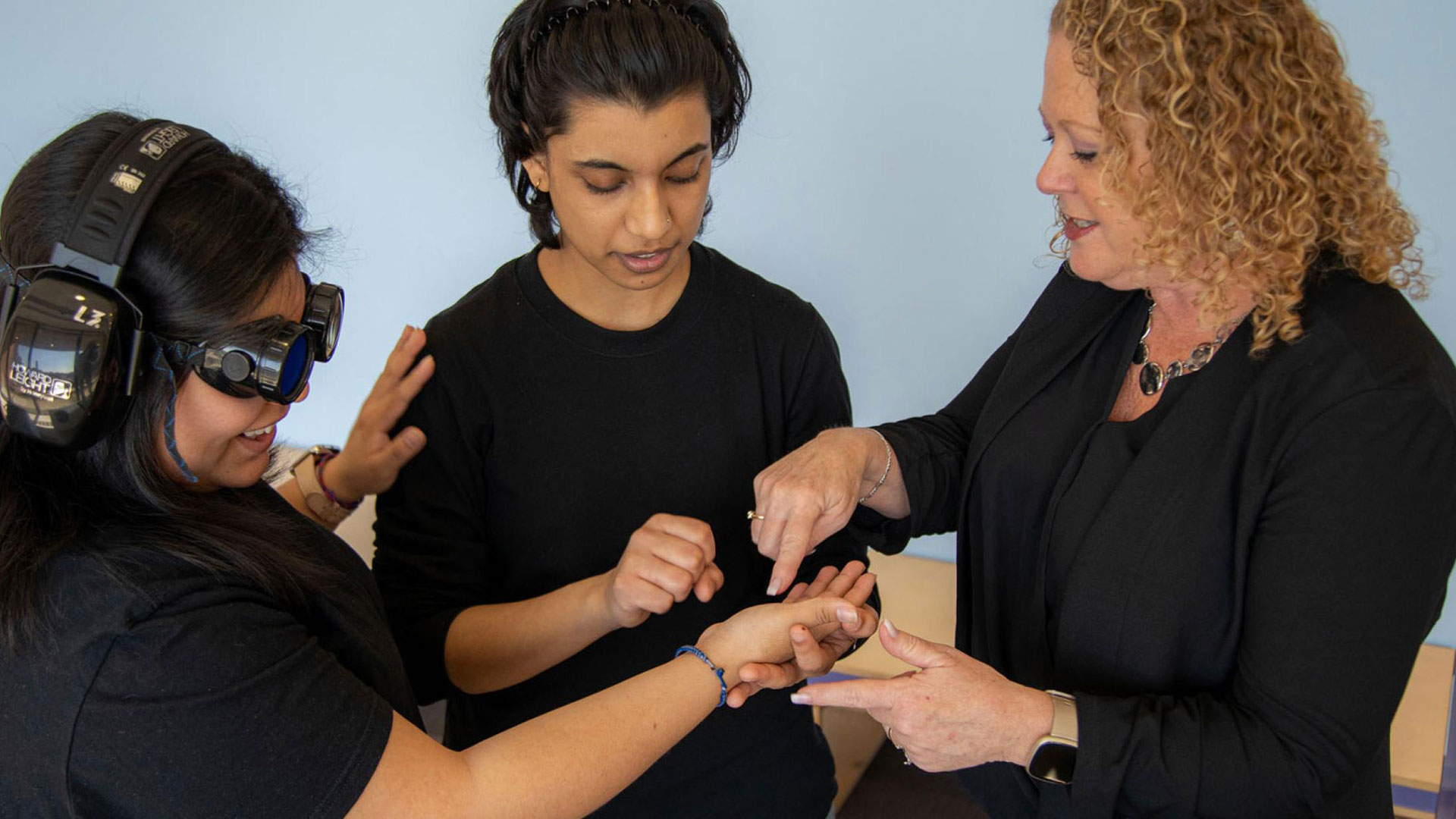
The Deafblind and Intervenor Studies program will prepare you to work with individuals who have combined vision and hearing loss. This is a hybrid program that includes online and in-person components.
Full Description

The one-year Deafblind and Intervenor Studies (C158) certificate program will prepare you to support individuals with combined hearing and vision loss, enabling them to access information and interact more fully with their environment.
If you have a passion for helping others, want to work in a dynamic sector that has a surplus of employment opportunities, are creative and a good communicator, consider becoming a Deafblind intervenor.
Courses are delivered in a hybrid (in-person & online) format in both semesters.
You will learn how to:
- work with Deafblind children and adults
- support Deafblind individuals with complex medical needs that include aging
- interact with members of the Deafblind community both in person & virtually
You will develop specialized skills, including:
- American Sign Language (ASL), a visual language adapted to accommodate those with dual sensory loss
- alternate communication methods
- professionalism, values and ethics
- sighted guide
You will also gain practical, hands-on experience working directly with individuals who are Deafblind.
Essential Skills of an Intervenor
To be an effective Intervenor, we recommend that you have these key characteristics:
- Strong communicator – Clear and effective communication will be key as you will be responsible for providing access to visual, auditory and environmental information.
- Creative – In some circumstances, to make information accessible, you may need to think and act creatively to properly relay situational information.
- Flexible – Being flexible is a key attribute, as each day "on the job" will be different from the next.
- Trustworthy – You will play an important role in the lives of your clients, so the ability to build trust easily is an important asset.
Is the Deafblind & Intervenor Studies (C158) program right for you?
Your Field Education Options
The field placement component of this program will give you the hands-on experience you need to develop confidence in your newly learned skills. You'll work directly with individuals who are Deafblind, having the chance to apply your classroom theory in a real-world environment.
You can expect two placements in this program – both in semester 2. One will be learning to work with individuals with congenital deafblindness and the other with acquired deafblindness. Placements are scheduled two days per week for a total of 84 hours.
During each placement you can expect to be both an observer and get practical, hands-on experience.
Placements can be across the lifespan with children, adults and seniors and within a variety of educational and community settings.
Career & Postgraduate Study Opportunities
Industry
Intervenors work with Deafblind individuals (children and adults) across Canada.
As a graduate of this program, you can find employment with:
- organizations serving Deafblind individuals
- educational institutions and specialized school programs
- contracts with individuals with deafblindness
- community residential settings
Educational Pathways
This Deafblind and Intervenor Studies (C158) certificate provide a strong foundation for entering other programs at George Brown Polytechnic, including:
- American Sign Language and Deaf Studies (C144)
- Child and Youth Care (C133)
- Early Childhood Education (C100)
- Personal Support Worker (C112)
- Social Service Worker (C119)
- Practical Nursing (S121)
- Honours Bachelor of Interpretation-ASL English (C302)
Alumni Impact
We are immensely proud of the contributions of our alumni in Toronto and around the globe.
From Michelin-starred restaurants to major construction, entertainment, community and financial organizations, our graduates are truly making an impact across a range of industries.
Alumni Impact
We are immensely proud of the contributions of our alumni in Toronto and around the globe.
From Michelin-starred restaurants to major construction, entertainment, community and financial organizations, our graduates are truly making an impact across a range of industries.
Courses
Semester 1
| Code | Course Name |
|---|---|
| COMM2000 | Communicating Across Contexts |
| INTV1020 | Congenital Communication Strategies and Intervenor Principles I |
| INTV1021 | Acquired Communication Strategies and Intervenor Principles I |
| INTV1022 | American Sign Language 1 |
| INTV1023 | Introduction to Deafblindness |
| INTV1024 | Value, Ethics, and Professional Practice |
| INTV1025 | Introduction to Sensory Systems and Human Development |
Semester 2
| Code | Course Name |
|---|---|
| INTV1030 | Congenital Communication Strategies and Principles II |
| INTV1031 | Acquired Communication Strategies and Intervenor Principles II |
| INTV1032 | American Sign Language 2 |
| INTV1033 | Impact of Health and Aging on Deafblindness |
| INTV1034 | Accessibility and Program Planning |
| INTV1035 | Field Placement Seminar |
| INTV1036 | Field Placement |
| INTV1037 | Introduction to Sighted Guide |
Course Outline URL
Program Learning Outcomes
The graduate demonstrates the ability to:
- Integrate theory, principles, strategies and community resources into competent intervenor practice.
- Perform the role of the intervenor in a safe, ethical manner that is consistent with professional practice and public policy.
- Utilize a variety of alternative communication methods to effectively facilitate interactions between individuals who are Deafblind and others.
- Examine the social-emotional impact of deafblindness on the lives of individuals, their families and their communities to appropriately adapt intervention strategies and respect cultural identification.
- Identify current technologies and assistive devices to meet the unique needs of individuals with deafblindness.
- Apply the appropriate strategies to develop or elaborate on concepts to promote understanding by the individual with deafblindness.
- Examine the impact of physical health, mental health and aging on the individual with deafblindness to appropriately adapt and implement intervention strategies.
Tuition & Fees
Domestic Tuition
$4,737.00 *
International Tuition
$18,625.00 **
Additional Costs
* Amounts listed are the estimated total of tuition, materials, student service and ancillary fees for the first two semesters of programs starting in Fall 2024. Fees are subject to change for programs starting in Fall 2025 and at later dates. This fee does not include books, which are to be purchased by the student separately.
** Amounts listed are the estimated total of tuition, materials, student service and ancillary fees for the first two semesters of programs starting in Fall 2025. Tuition fees are subject to board approval. Material, student service and ancillary fees are estimated based on prior years. All fees are subject to change without notice. This fee does not include books, which are to be purchased by the student separately.
International Students
Visit the International Fees and Related Costs page for more information.
Financial Assistance
This program is approved for OSAP funding, provided the applicant meets OSAP eligibility criteria.
Each year we award over $2 million dollars in scholarships, awards and bursaries to first-year students. Check out our financial aid web pages for ways to pay for college and the full list of available scholarships, awards and bursaries.
Admission Requirements
Applicants are selected on the basis of their academic achievement, including the required courses, and any other selection criteria outlined below.
- Ontario Secondary School Diploma or equivalent**
- grade 12 English (C or U) with a minimum grade of 60 per cent or higher.
** Mature student status (19 years of age or older and no OSSD)
Mature students may take the Admissions Assessment for English, OR may consider upgrading to achieve the credit(s) needed in English.
Please note that George Brown is committed to ensuring that applicants will succeed in their program of choice and meeting the minimum requirements does not guarantee admission to the program. Applicants may be required to have grades higher than the minimum requirements stated.
Course exemptions
College or university credits may qualify you for course exemptions. Please visit Transfer Guide for more information.
International Students
Visit the International Admissions page for more information regarding country specific admission requirements.
Special Requirements
Vulnerable Sector Check requirements and program policy
- In compliance with the requirements of our placement partners, all students in this program are required to have a Vulnerable Sector Check completed, and this check must be renewed annually before entering into field or clinical placement. The Vulnerable Sector Check process typically takes two to three months, but under some circumstances can take four to eight months. This is required to protect the clientele of our placement partner agencies, who are considered “vulnerable persons” under the law.
- Students are responsible for ensuring that the Vulnerable Sector Check covers appropriateness for “individuals being employed and/or volunteering who will be working with vulnerable person(s).”
- Students are required to keep the original copy of their Vulnerable Sector Check.
- Students who are unable to provide a “clear” Vulnerable Sector Check may not be able to start their field or clinical placement and therefore may be unable to complete the program. Students who are not eligible to attend their practice placement due to a “not clear” status will jeopardize their progress in the program. Our agency partners have the final decision for students being allowed to practice in their agency.
- Failure to meet the requirements for field placement will prevent students from completing the program and/or securing employment.
- The fees for the police record check vary and must be paid by the student. For more information, please visit the Pre-placement website.
- Students are required to successfully complete a Ministry-approved crisis intervention training certificate in their fifth semester.
Our clinical placement partners may require students to show proof of vaccination. It is your responsibility to ensure all pre-clinical requirements are met.
How to Apply
Domestic students should apply through Ontario Colleges.
International Students
Visit the How to Apply page for more information on how and when to apply.
International students should apply through the George Brown Polytechnic Online Application System.
Contact Us
School of Deaf and Deafblind Studies
Email: communityservices@georgebrown.ca
Our office hours are 8 a.m. – 4 p.m.
Cheryl Ramey, Program Co-ordinator, Deafblind & Intervenor Studies, email cramey@georgebrown.ca
International Students
Contact one of our international recruitment representatives specializing by country of origin by either booking a virtual meeting or submitting an inquiry. For more information visit the International Contact Us page
Program Description
Leadership Claims
George Brown Polytechnic is the first Canadian college to offer a Deafblind Intervenor certificate program.
Program Overview
The Deafblind and Intervenor Studies program will prepare you to work with individuals who have combined vision and hearing loss. This is a hybrid program that includes online and in-person components.
Full Description
The one-year Deafblind and Intervenor Studies (C158) certificate program will prepare you to support individuals with combined hearing and vision loss, enabling them to access information and interact more fully with their environment.
If you have a passion for helping others, want to work in a dynamic sector that has a surplus of employment opportunities, are creative and a good communicator, consider becoming a Deafblind intervenor.
Courses are delivered in a hybrid (in-person & online) format in both semesters.
You will learn how to:
- work with Deafblind children and adults
- support Deafblind individuals with complex medical needs that include aging
- interact with members of the Deafblind community both in person & virtually
You will develop specialized skills, including:
- American Sign Language (ASL), a visual language adapted to accommodate those with dual sensory loss
- alternate communication methods
- professionalism, values and ethics
- sighted guide
You will also gain practical, hands-on experience working directly with individuals who are Deafblind.
Essential Skills of an Intervenor
To be an effective Intervenor, we recommend that you have these key characteristics:
- Strong communicator – Clear and effective communication will be key as you will be responsible for providing access to visual, auditory and environmental information.
- Creative – In some circumstances, to make information accessible, you may need to think and act creatively to properly relay situational information.
- Flexible – Being flexible is a key attribute, as each day "on the job" will be different from the next.
- Trustworthy – You will play an important role in the lives of your clients, so the ability to build trust easily is an important asset.
Is the Deafblind & Intervenor Studies (C158) program right for you?
Your Field Education Options
The field placement component of this program will give you the hands-on experience you need to develop confidence in your newly learned skills. You'll work directly with individuals who are Deafblind, having the chance to apply your classroom theory in a real-world environment.
You can expect two placements in this program – both in semester 2. One will be learning to work with individuals with congenital deafblindness and the other with acquired deafblindness. Placements are scheduled two days per week for a total of 84 hours.
During each placement you can expect to be both an observer and get practical, hands-on experience.
Placements can be across the lifespan with children, adults and seniors and within a variety of educational and community settings.
Career & Postgraduate Study Opportunities
Industry
Intervenors work with Deafblind individuals (children and adults) across Canada.
As a graduate of this program, you can find employment with:
- organizations serving Deafblind individuals
- educational institutions and specialized school programs
- contracts with individuals with deafblindness
- community residential settings
Educational Pathways
This Deafblind and Intervenor Studies (C158) certificate provide a strong foundation for entering other programs at George Brown Polytechnic, including:
- American Sign Language and Deaf Studies (C144)
- Child and Youth Care (C133)
- Early Childhood Education (C100)
- Personal Support Worker (C112)
- Social Service Worker (C119)
- Practical Nursing (S121)
- Honours Bachelor of Interpretation-ASL English (C302)
Alumni Impact
We are immensely proud of the contributions of our alumni in Toronto and around the globe.
From Michelin-starred restaurants to major construction, entertainment, community and financial organizations, our graduates are truly making an impact across a range of industries.
Courses
Semester 1
| Code | Course Name |
|---|---|
| COMM2000 | Communicating Across Contexts |
| INTV1020 | Congenital Communication Strategies and Intervenor Principles I |
| INTV1021 | Acquired Communication Strategies and Intervenor Principles I |
| INTV1022 | American Sign Language 1 |
| INTV1023 | Introduction to Deafblindness |
| INTV1024 | Value, Ethics, and Professional Practice |
| INTV1025 | Introduction to Sensory Systems and Human Development |
Semester 2
| Code | Course Name |
|---|---|
| INTV1030 | Congenital Communication Strategies and Principles II |
| INTV1031 | Acquired Communication Strategies and Intervenor Principles II |
| INTV1032 | American Sign Language 2 |
| INTV1033 | Impact of Health and Aging on Deafblindness |
| INTV1034 | Accessibility and Program Planning |
| INTV1035 | Field Placement Seminar |
| INTV1036 | Field Placement |
| INTV1037 | Introduction to Sighted Guide |
Course Outline URL
Tuition & Fees
Domestic Tuition
$4,737.00 *
International Tuition
$18,625.00 **
Additional Costs
* Amounts listed are the estimated total of tuition, materials, student service and ancillary fees for the first two semesters of programs starting in Fall 2024. Fees are subject to change for programs starting in Fall 2025 and at later dates. This fee does not include books, which are to be purchased by the student separately.
** Amounts listed are the estimated total of tuition, materials, student service and ancillary fees for the first two semesters of programs starting in Fall 2025. Tuition fees are subject to board approval. Material, student service and ancillary fees are estimated based on prior years. All fees are subject to change without notice. This fee does not include books, which are to be purchased by the student separately.
International Students
Visit the International Fees and Related Costs page for more information.
Financial Assistance
This program is approved for OSAP funding, provided the applicant meets OSAP eligibility criteria.
Each year we award over $2 million dollars in scholarships, awards and bursaries to first-year students. Check out our financial aid web pages for ways to pay for college and the full list of available scholarships, awards and bursaries.
Admission Requirements
Applicants are selected on the basis of their academic achievement, including the required courses, and any other selection criteria outlined below.
- Ontario Secondary School Diploma or equivalent**
- grade 12 English (C or U) with a minimum grade of 60 per cent or higher.
** Mature student status (19 years of age or older and no OSSD)
Mature students may take the Admissions Assessment for English, OR may consider upgrading to achieve the credit(s) needed in English.
Please note that George Brown is committed to ensuring that applicants will succeed in their program of choice and meeting the minimum requirements does not guarantee admission to the program. Applicants may be required to have grades higher than the minimum requirements stated.
Course exemptions
College or university credits may qualify you for course exemptions. Please visit Transfer Guide for more information.
International Students
Visit the International Admissions page for more information regarding country specific admission requirements.
Special Requirements
Vulnerable Sector Check requirements and program policy
- In compliance with the requirements of our placement partners, all students in this program are required to have a Vulnerable Sector Check completed, and this check must be renewed annually before entering into field or clinical placement. The Vulnerable Sector Check process typically takes two to three months, but under some circumstances can take four to eight months. This is required to protect the clientele of our placement partner agencies, who are considered “vulnerable persons” under the law.
- Students are responsible for ensuring that the Vulnerable Sector Check covers appropriateness for “individuals being employed and/or volunteering who will be working with vulnerable person(s).”
- Students are required to keep the original copy of their Vulnerable Sector Check.
- Students who are unable to provide a “clear” Vulnerable Sector Check may not be able to start their field or clinical placement and therefore may be unable to complete the program. Students who are not eligible to attend their practice placement due to a “not clear” status will jeopardize their progress in the program. Our agency partners have the final decision for students being allowed to practice in their agency.
- Failure to meet the requirements for field placement will prevent students from completing the program and/or securing employment.
- The fees for the police record check vary and must be paid by the student. For more information, please visit the Pre-placement website.
- Students are required to successfully complete a Ministry-approved crisis intervention training certificate in their fifth semester.
Our clinical placement partners may require students to show proof of vaccination. It is your responsibility to ensure all pre-clinical requirements are met.
How to Apply
Domestic students should apply through Ontario Colleges.
International Students
Visit the How to Apply page for more information on how and when to apply.
International students should apply through the George Brown Polytechnic Online Application System.
Program Learning Outcomes
The graduate demonstrates the ability to:
- Integrate theory, principles, strategies and community resources into competent intervenor practice.
- Perform the role of the intervenor in a safe, ethical manner that is consistent with professional practice and public policy.
- Utilize a variety of alternative communication methods to effectively facilitate interactions between individuals who are Deafblind and others.
- Examine the social-emotional impact of deafblindness on the lives of individuals, their families and their communities to appropriately adapt intervention strategies and respect cultural identification.
- Identify current technologies and assistive devices to meet the unique needs of individuals with deafblindness.
- Apply the appropriate strategies to develop or elaborate on concepts to promote understanding by the individual with deafblindness.
- Examine the impact of physical health, mental health and aging on the individual with deafblindness to appropriately adapt and implement intervention strategies.
Contact Us
School of Deaf and Deafblind Studies
Email: communityservices@georgebrown.ca
Our office hours are 8 a.m. – 4 p.m.
Cheryl Ramey, Program Co-ordinator, Deafblind & Intervenor Studies, email cramey@georgebrown.ca
International Students
Contact one of our international recruitment representatives specializing by country of origin by either booking a virtual meeting or submitting an inquiry. For more information visit the International Contact Us page

Visit St. James Campus
Book campus tourGet answers to your questions
Book info sessionVisit
Our Virtual Tour showcases the following areas:
- Campus Facilities
- Student Services
- Applied Learning Environments
- Labs & Classrooms
Deafblind & Intervenor Studies
(C158)
Program Details
- Program Code: C158
- Credential: Ontario College Certificate
- Duration: 1 year (2 semesters)
- Method of Study: Full-time
- Starting Months: September
- Domestic Tuition: $4,685.00 *
- International Tuition: $18,360.00 **
Program Availability
| Semester | Domestic | International |
|---|---|---|
| Fall 2024 | Closed | Closed |
| Winter 2025 | Not Available | Not Available |
| Spring 2025 | Not Available | Not Available |
- Work-Integrated Learning:
Yes
- PGWP Eligible: No
- CIP Code: N/A
Get answers to your questions
Book info sessionProgram Description
Leadership Claims
George Brown College is the first Canadian college to offer a Deafblind Intervenor certificate program.
Program Overview
Eligible for Post-Graduation Work Permit (PGWP): Yes
CIP code: 51.2399
The Deafblind and Intervenor Studies program prepares you to work with individuals who have combined vision and hearing loss. This is a hybrid program, including online and in-person components.
Full Description
The one-year Deafblind and Intervenor Studies (C158) certificate program prepares you to support individuals with combined hearing and vision loss, enabling them to access information and interact more fully with their environment.
If you have a passion for helping others, want to work in a dynamic sector that has a surplus of employment opportunities, are creative and a good communicator, consider becoming a Deafblind intervenor.
Courses are delivered in a hybrid (online and in-person) format in both semesters. You will also gain practical experience working directly with individuals who are Deafblind.
You’ll learn the following in this program:
- how to work with Deafblind children and adults
- how to support Deafblind individuals with complex medical needs that include aging
- how to interact with members of the Deafblind community both virtually and in person
- American Sign Language (ASL), a visual language adapted to accommodate those with dual sensory loss
- alternate communication methods, professionalism, values, ethics, and sighted guide
Essential Skills of an Intervenor
To be an effective Intervenor, we recommend that you have these key characteristics:
- Strong communicator – Clear and effective communication will be key as you will be responsible for providing access to visual, auditory, and environmental information.
- Creative – In some circumstances, to make information accessible, you may need to think and act creatively to properly relay situational information.
- Flexible – Being flexible is a key attribute, as each day "on the job" will be different from the next.
- Trustworthy – You will play an important role in the lives of your clients, so the ability to build trust easily is an important asset.
Is the Deafblind & Intervenor Studies (C158) program right for you?
Your Field Education Options
The field placement component of this program provides students with practical experience working directly with individuals who are Deafblind. Of the two placements we offer, one will be learning to work with consumers with congenital deafblindness and the other with acquired deafblindness.
Placements are scheduled two days per week in the second half of semester 2, for a total of 84 hours.
Students will participate in both observation and hands-on practice in each of the placements, applying the theory and technical skills they've learned to date.
Placements can be across the lifespan and can be with children, adults, and seniors and within a variety of educational and community settings.
Career & Postgraduate Study Opportunities
Industry
Intervenors work with Deafblind individuals (children and adults) across Canada. Graduates can find employment with:
- organizations serving Deafblind individuals
- educational institutions and specialized school programs
- contracts with individuals with deafblindness
- community residential settings
Educational Pathways
This Deafblind and Intervenor Studies (C158) certificate provide a strong foundation for entering other programs at George Brown College, including:
- American Sign Language and Deaf Studies (C114)
- Child and Youth Care (C133)
- Early Childhood Education (C100)
- Personal Support Worker (C114)
- Social Service Worker (C119)
- Practical Nursing (S121)
- Honours Bachelor of Interpretation-ASL English (C302)
Alumni Impact
We are immensely proud of the contributions of our alumni in Toronto and around the globe.
From Michelin-starred restaurants to major construction, entertainment, community and financial organizations, our graduates are truly making an impact across a range of industries.
Alumni Impact
We are immensely proud of the contributions of our alumni in Toronto and around the globe.
From Michelin-starred restaurants to major construction, entertainment, community and financial organizations, our graduates are truly making an impact across a range of industries.
Courses
Semester 1
| Code | Course Name |
|---|---|
| COMM2000 | Communicating Across Contexts |
| INTV1020 | Congenital Communication Strategies and Intervenor Principles I |
| INTV1021 | Acquired Communication Strategies and Intervenor Principles I |
| INTV1022 | American Sign Language 1 |
| INTV1023 | Introduction to Deafblindness |
| INTV1024 | Value, Ethics, and Professional Practice |
| INTV1025 | Introduction to Sensory Systems and Human Development |
Semester 2
| Code | Course Name |
|---|---|
| INTV1030 | Congenital Communication Strategies and Principles II |
| INTV1031 | Acquired Communication Strategies and Intervenor Principles II |
| INTV1032 | American Sign Language 2 |
| INTV1033 | Impact of Health and Aging on Deafblindness |
| INTV1034 | Accessibility and Program Planning |
| INTV1035 | Field Placement Seminar |
| INTV1036 | Field Placement |
| INTV1037 | Introduction to Sighted Guide |
Course Outline URL
Program Learning Outcomes
The graduate demonstrates the ability to:
- Integrate theory, principles, strategies and community resources into competent intervenor practice.
- Perform the role of the intervenor in a safe, ethical manner that is consistent with professional practice and public policy.
- Utilize a variety of alternative communication methods to effectively facilitate interactions between individuals who are Deafblind and others.
- Examine the social-emotional impact of deafblindness on the lives of individuals, their families and their communities to appropriately adapt intervention strategies and respect cultural identification.
- Identify current technologies and assistive devices to meet the unique needs of individuals with deafblindness.
- Apply the appropriate strategies to develop or elaborate on concepts to promote understanding by the individual with deafblindness.
- Examine the impact of physical health, mental health and aging on the individual with deafblindness to appropriately adapt and implement intervention strategies.
Tuition & Fees
Domestic Tuition
$4,685.00 *
International Tuition
$18,360.00 **
Additional Costs
* Amounts listed are the estimated total of tuition, materials, student service and ancillary fees for the first two semesters of programs starting in Fall 2023. Fees are subject to change for programs starting in Fall 2024 and at later dates. This fee does not include books, which are to be purchased by the student separately.
** Amounts listed are the estimated total of tuition, materials, student service and ancillary fees for the first two semesters of programs starting in Fall 2024. Tuition fees are subject to board approval. Material, student service and ancillary fees are estimated based on prior years. All fees are subject to change without notice. This fee does not include books, which are to be purchased by the student separately.
International Students
Visit the International Fees and Related Costs page for more information.
Financial Assistance
This program is approved for OSAP funding, provided the applicant meets OSAP eligibility criteria.
Each year we award over $2 million dollars in scholarships, awards and bursaries to first-year students. Check out our financial aid webpages for ways to pay for college and the full list of available scholarships, awards and bursaries.
Admission Requirements
Applicants are selected on the basis of their academic achievement, including the required courses, and any other selection criteria outlined below.
- Ontario Secondary School Diploma or equivalent**
- grade 12 English (C or U) with a minimum grade of 60 per cent or higher.
** Mature student status (19 years of age or older and no OSSD)
Mature students may take the Admissions Assessment for English, OR may consider upgrading to achieve the credit(s) needed in English.
Please note that George Brown is committed to ensuring that applicants will succeed in their program of choice and meeting the minimum requirements does not guarantee admission to the program. Applicants may be required to have grades higher than the minimum requirements stated.
Course exemptions
College or university credits may qualify you for course exemptions. Please visit Transfer Guide for more information.
International Students
Visit the International Admissions page for more information regarding country specific admission requirements.
Special Requirements
Vulnerable Sector Check requirements and program policy
- In compliance with the requirements of our placement partners, all students in this program are required to have a Vulnerable Sector Check completed, and this check must be renewed annually before entering into field or clinical placement. The Vulnerable Sector Check process typically takes two to three months, but under some circumstances can take four to eight months. This is required to protect the clientele of our placement partner agencies, who are considered “vulnerable persons” under the law.
- Students are responsible for ensuring that the Vulnerable Sector Check covers appropriateness for “individuals being employed and/or volunteering who will be working with vulnerable person(s).”
- Students are required to keep the original copy of their Vulnerable Sector Check.
- Students who are unable to provide a “clear” Vulnerable Sector Check may not be able to start their field or clinical placement and therefore may be unable to complete the program. Students who are not eligible to attend their practice placement due to a “not clear” status will jeopardize their progress in the program. Our agency partners have the final decision for students being allowed to practice in their agency.
- Failure to meet the requirements for field placement will prevent students from completing the program and/or securing employment.
- The fees for the police record check vary and must be paid by the student. For more information, please visit the Pre-placement website.
- Students are required to successfully complete a Ministry-approved crisis intervention training certificate in their fifth semester.
Our clinical placement partners may require students to show proof of vaccination. It is your responsibility to ensure all pre-clinical requirements are met.
How to Apply
Domestic students should apply through Ontario Colleges.
International Students
Visit the How to Apply page for more information on how and when to apply.
International students should apply through the George Brown Polytechnic Online Application System.
Contact Us
School of Deaf and Deafblind Studies
Email: communityservices@georgebrown.ca
Our office hours are 8 a.m. – 4 p.m.
Cheryl Ramey, Program Coordinator, Deafblind & Intervenor Studies, email cramey@georgebrown.ca
For more information about George Brown College Contact George Brown College | George Brown College
International Students
Contact one of our international recruitment representatives specializing by country of origin by either booking a virtual meeting or submitting an inquiry. For more information visit the International Contact Us page
Program Description
Leadership Claims
George Brown College is the first Canadian college to offer a Deafblind Intervenor certificate program.
Program Overview
Eligible for Post-Graduation Work Permit (PGWP): Yes
CIP code: 51.2399
The Deafblind and Intervenor Studies program prepares you to work with individuals who have combined vision and hearing loss. This is a hybrid program, including online and in-person components.
Full Description
The one-year Deafblind and Intervenor Studies (C158) certificate program prepares you to support individuals with combined hearing and vision loss, enabling them to access information and interact more fully with their environment.
If you have a passion for helping others, want to work in a dynamic sector that has a surplus of employment opportunities, are creative and a good communicator, consider becoming a Deafblind intervenor.
Courses are delivered in a hybrid (online and in-person) format in both semesters. You will also gain practical experience working directly with individuals who are Deafblind.
You’ll learn the following in this program:
- how to work with Deafblind children and adults
- how to support Deafblind individuals with complex medical needs that include aging
- how to interact with members of the Deafblind community both virtually and in person
- American Sign Language (ASL), a visual language adapted to accommodate those with dual sensory loss
- alternate communication methods, professionalism, values, ethics, and sighted guide
Essential Skills of an Intervenor
To be an effective Intervenor, we recommend that you have these key characteristics:
- Strong communicator – Clear and effective communication will be key as you will be responsible for providing access to visual, auditory, and environmental information.
- Creative – In some circumstances, to make information accessible, you may need to think and act creatively to properly relay situational information.
- Flexible – Being flexible is a key attribute, as each day "on the job" will be different from the next.
- Trustworthy – You will play an important role in the lives of your clients, so the ability to build trust easily is an important asset.
Is the Deafblind & Intervenor Studies (C158) program right for you?
Your Field Education Options
The field placement component of this program provides students with practical experience working directly with individuals who are Deafblind. Of the two placements we offer, one will be learning to work with consumers with congenital deafblindness and the other with acquired deafblindness.
Placements are scheduled two days per week in the second half of semester 2, for a total of 84 hours.
Students will participate in both observation and hands-on practice in each of the placements, applying the theory and technical skills they've learned to date.
Placements can be across the lifespan and can be with children, adults, and seniors and within a variety of educational and community settings.
Career & Postgraduate Study Opportunities
Industry
Intervenors work with Deafblind individuals (children and adults) across Canada. Graduates can find employment with:
- organizations serving Deafblind individuals
- educational institutions and specialized school programs
- contracts with individuals with deafblindness
- community residential settings
Educational Pathways
This Deafblind and Intervenor Studies (C158) certificate provide a strong foundation for entering other programs at George Brown College, including:
- American Sign Language and Deaf Studies (C114)
- Child and Youth Care (C133)
- Early Childhood Education (C100)
- Personal Support Worker (C114)
- Social Service Worker (C119)
- Practical Nursing (S121)
- Honours Bachelor of Interpretation-ASL English (C302)
Alumni Impact
We are immensely proud of the contributions of our alumni in Toronto and around the globe.
From Michelin-starred restaurants to major construction, entertainment, community and financial organizations, our graduates are truly making an impact across a range of industries.
Courses
Semester 1
| Code | Course Name |
|---|---|
| COMM2000 | Communicating Across Contexts |
| INTV1020 | Congenital Communication Strategies and Intervenor Principles I |
| INTV1021 | Acquired Communication Strategies and Intervenor Principles I |
| INTV1022 | American Sign Language 1 |
| INTV1023 | Introduction to Deafblindness |
| INTV1024 | Value, Ethics, and Professional Practice |
| INTV1025 | Introduction to Sensory Systems and Human Development |
Semester 2
| Code | Course Name |
|---|---|
| INTV1030 | Congenital Communication Strategies and Principles II |
| INTV1031 | Acquired Communication Strategies and Intervenor Principles II |
| INTV1032 | American Sign Language 2 |
| INTV1033 | Impact of Health and Aging on Deafblindness |
| INTV1034 | Accessibility and Program Planning |
| INTV1035 | Field Placement Seminar |
| INTV1036 | Field Placement |
| INTV1037 | Introduction to Sighted Guide |
Course Outline URL
Tuition & Fees
Domestic Tuition
$4,685.00 *
International Tuition
$18,360.00 **
Additional Costs
* Amounts listed are the estimated total of tuition, materials, student service and ancillary fees for the first two semesters of programs starting in Fall 2023. Fees are subject to change for programs starting in Fall 2024 and at later dates. This fee does not include books, which are to be purchased by the student separately.
** Amounts listed are the estimated total of tuition, materials, student service and ancillary fees for the first two semesters of programs starting in Fall 2024. Tuition fees are subject to board approval. Material, student service and ancillary fees are estimated based on prior years. All fees are subject to change without notice. This fee does not include books, which are to be purchased by the student separately.
International Students
Visit the International Fees and Related Costs page for more information.
Financial Assistance
This program is approved for OSAP funding, provided the applicant meets OSAP eligibility criteria.
Each year we award over $2 million dollars in scholarships, awards and bursaries to first-year students. Check out our financial aid webpages for ways to pay for college and the full list of available scholarships, awards and bursaries.
Admission Requirements
Applicants are selected on the basis of their academic achievement, including the required courses, and any other selection criteria outlined below.
- Ontario Secondary School Diploma or equivalent**
- grade 12 English (C or U) with a minimum grade of 60 per cent or higher.
** Mature student status (19 years of age or older and no OSSD)
Mature students may take the Admissions Assessment for English, OR may consider upgrading to achieve the credit(s) needed in English.
Please note that George Brown is committed to ensuring that applicants will succeed in their program of choice and meeting the minimum requirements does not guarantee admission to the program. Applicants may be required to have grades higher than the minimum requirements stated.
Course exemptions
College or university credits may qualify you for course exemptions. Please visit Transfer Guide for more information.
International Students
Visit the International Admissions page for more information regarding country specific admission requirements.
Special Requirements
Vulnerable Sector Check requirements and program policy
- In compliance with the requirements of our placement partners, all students in this program are required to have a Vulnerable Sector Check completed, and this check must be renewed annually before entering into field or clinical placement. The Vulnerable Sector Check process typically takes two to three months, but under some circumstances can take four to eight months. This is required to protect the clientele of our placement partner agencies, who are considered “vulnerable persons” under the law.
- Students are responsible for ensuring that the Vulnerable Sector Check covers appropriateness for “individuals being employed and/or volunteering who will be working with vulnerable person(s).”
- Students are required to keep the original copy of their Vulnerable Sector Check.
- Students who are unable to provide a “clear” Vulnerable Sector Check may not be able to start their field or clinical placement and therefore may be unable to complete the program. Students who are not eligible to attend their practice placement due to a “not clear” status will jeopardize their progress in the program. Our agency partners have the final decision for students being allowed to practice in their agency.
- Failure to meet the requirements for field placement will prevent students from completing the program and/or securing employment.
- The fees for the police record check vary and must be paid by the student. For more information, please visit the Pre-placement website.
- Students are required to successfully complete a Ministry-approved crisis intervention training certificate in their fifth semester.
Our clinical placement partners may require students to show proof of vaccination. It is your responsibility to ensure all pre-clinical requirements are met.
How to Apply
Domestic students should apply through Ontario Colleges.
International Students
Visit the How to Apply page for more information on how and when to apply.
International students should apply through the George Brown Polytechnic Online Application System.
Program Learning Outcomes
The graduate demonstrates the ability to:
- Integrate theory, principles, strategies and community resources into competent intervenor practice.
- Perform the role of the intervenor in a safe, ethical manner that is consistent with professional practice and public policy.
- Utilize a variety of alternative communication methods to effectively facilitate interactions between individuals who are Deafblind and others.
- Examine the social-emotional impact of deafblindness on the lives of individuals, their families and their communities to appropriately adapt intervention strategies and respect cultural identification.
- Identify current technologies and assistive devices to meet the unique needs of individuals with deafblindness.
- Apply the appropriate strategies to develop or elaborate on concepts to promote understanding by the individual with deafblindness.
- Examine the impact of physical health, mental health and aging on the individual with deafblindness to appropriately adapt and implement intervention strategies.
Contact Us
School of Deaf and Deafblind Studies
Email: communityservices@georgebrown.ca
Our office hours are 8 a.m. – 4 p.m.
Cheryl Ramey, Program Coordinator, Deafblind & Intervenor Studies, email cramey@georgebrown.ca
For more information about George Brown College Contact George Brown College | George Brown College
International Students
Contact one of our international recruitment representatives specializing by country of origin by either booking a virtual meeting or submitting an inquiry. For more information visit the International Contact Us page
Visit St. James Campus
Book campus tourGet answers to your questions
Book info sessionVisit
Our Virtual Tour showcases the following areas:
- Campus Facilities
- Student Services
- Applied Learning Environments
- Labs & Classrooms