
George Brown Polytechnic is located on the traditional territory of the Mississaugas of the Credit First Nation and other Indigenous peoples who have lived here over time. We are grateful to share this land as treaty people who learn, work and live in the community with each other.

Students and apprentices at George Brown Polytechnic stand to benefit directly from the federal government’s renewed investment in skilled trades and apprenticeship training—investments designed to make training more accessible, reduce delays and support learners from classroom to certification.
Measures announced in the Spring Economic Plan include enhanced income supports during mandatory in-class training, incentives to encourage completion of Red Seal certification and funding to expand training capacity at institutions like George Brown. Together, these changes are intended to address long-standing financial and logistical barriers that can slow or derail apprentices’ progress.
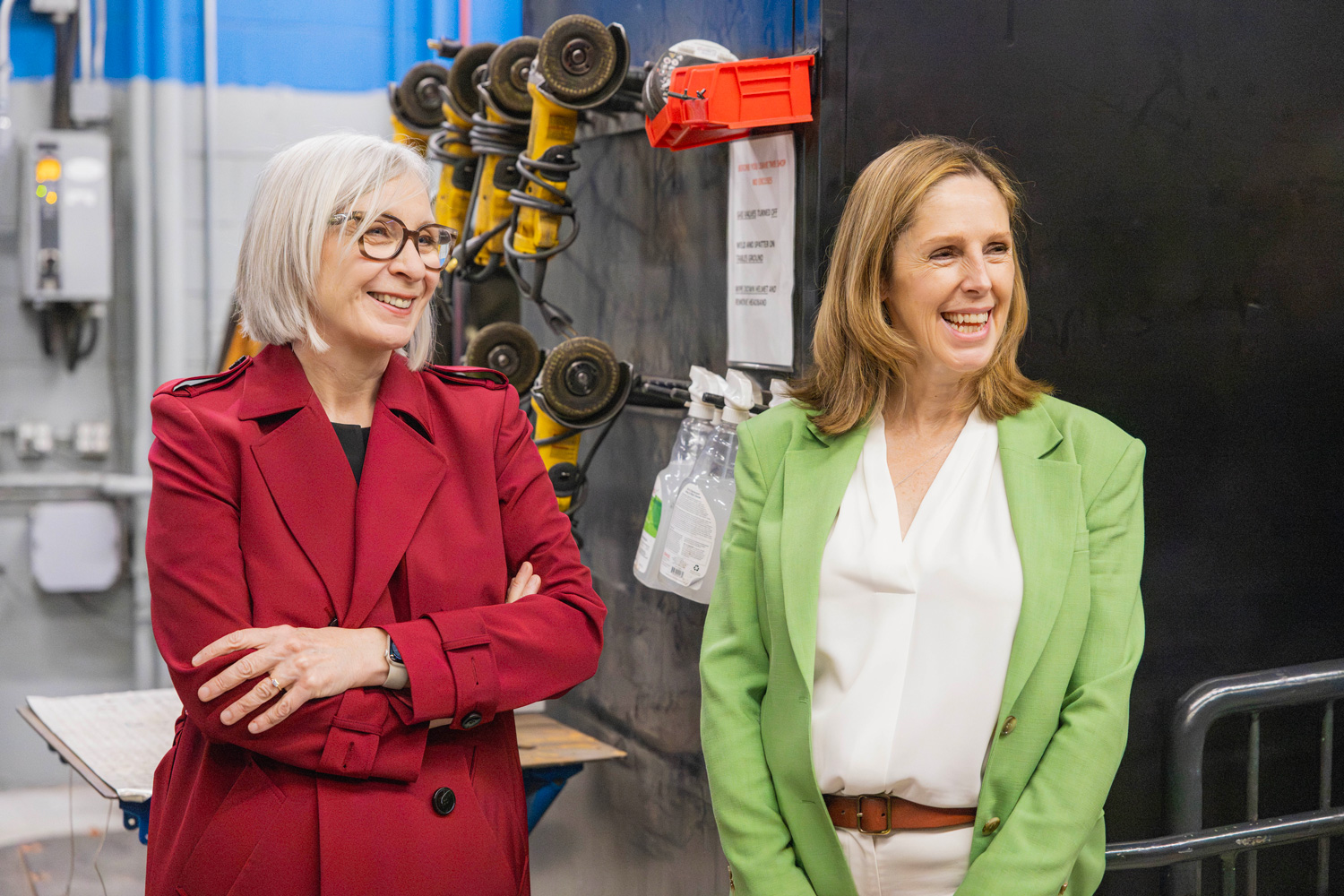
Those commitments were highlighted on May 8, when the Honourable Patty Hajdu, Minister of Jobs and Families, visited George Brown’s Casa Loma Campus to meet with sector leaders and students, underscoring the federal government’s growing national focus on skilled trades as a workforce priority.
What the plan means for George Brown students
For students and apprentices pursuing skilled trades, the Spring Economic Plan represents a shift toward more predictable, learner-centred pathways. Enhanced income supports during in-class training, improved labour mobility measures and new incentives for completion are designed to reduce financial and logistical barriers that often derail apprenticeships before certification.
At George Brown, these measures are expected to ease the pressure on students juggling tuition, the cost of tools, family responsibilities and employment. Expanded institutional capacity also means shorter waitlists for required courses—helping apprentices advance through their programs without unnecessary delays.
Nationally consistent Red Seal credentials further support mobility, allowing graduates to work across provinces as labour demand evolves in sectors tied to housing, infrastructure, manufacturing and defence.
Spotlighting training capacity and pathways to work
Minister Hajdu’s visit brought together leaders from Polytechnics Canada and partner institutions for a focused discussion on how recent federal investments can translate into expanded training capacity and clearer pathways from education to employment. The conversation centred on measures announced in the Spring Economic Plan, particularly new funding aimed at accelerating apprenticeship training, reducing waitlists for in-class instruction and increasing Red Seal completions.
Aligning funding with workforce realities
The Spring Economic Plan’s $6 billion commitment to skilled trades training over five years signals a significant shift in federal attention. Measures include redesigned income supports for apprentices during mandatory in-class training, a new completion bonus for Red Seal certification and targeted investments intended to modernize training infrastructure.
For George Brown, whose Casa Loma Campus is home to advanced construction, engineering and applied technology programs, the funding reinforces its role as a critical training hub in Ontario’s skilled trades ecosystem.
Seeing training in action
Following the discussion, Minister Hajdu toured some of the campus labs, led by Dr. Adel Esayed, Dean of the Faculty of Applied Science, Construction and Engineering Technology. The visit highlighted hands-on learning environments where students prepare for Red Seal pathways and connect their training directly to industry needs.
“Our students are learning on the job, in modern labs and alongside industry partners,” said Dr. Esayed. “When federal funding aligns with that reality, we can move faster—adding seats, shortening wait times and helping apprentices complete their Red Seal certification without unnecessary delays.”
He added that students benefit most when policy, funding and education work as an integrated system rather than disconnected initiatives.
Building capacity for Canada’s future
Minister Hajdu’s visit highlighted a shared message from institutions and government alike: meeting Canada’s housing, infrastructure and economic goals will depend on expanding and modernizing skilled trades education. Polytechnics such as George Brown are positioned to deliver that training at scale, ensuring students are prepared not just to enter the workforce but to move quickly toward certification and long-term careers.
Build your future with Apprenticeship and Skilled Trades at George Brown