

George Brown Polytechnic is located on the traditional territory of the Mississaugas of the Credit First Nation and other Indigenous peoples who have lived here over time. We are grateful to share this land as treaty people who learn, work and live in the community with each other.
George Brown Polytechnic is advancing its path to net zero through a strategic partnership with the City of Toronto’s Green Will Initiative (GWI)—a collaboration now featured in a newly released case study that highlights institutional leadership in building decarbonization.
The case study spotlights George Brown’s integrated, partnership-driven approach to reducing operational carbon emissions across a diverse campus portfolio. Through collaboration with GWI, utilities, and sector partners, the polytechnic has leveraged peer learning, technical expertise, and incentive programs to accelerate progress on key energy projects.
From planning to action
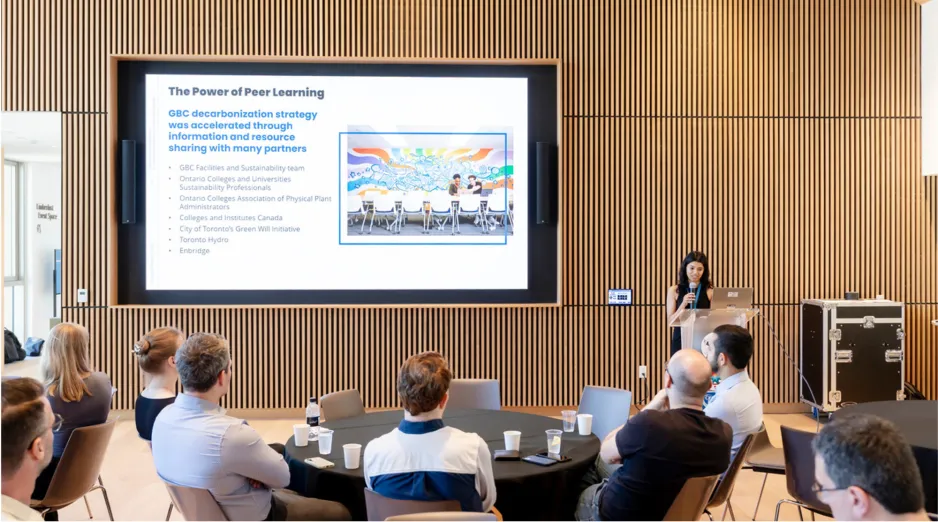
A milestone in the partnership came in July 2025, when George Brown hosted a Green Will Initiative collaboration event at Limberlost Place, Ontario’s first institutional mass timber building. The event brought together public, private, and institutional stakeholders to explore shared challenges and opportunities in the urban energy transition and to showcase low-carbon design and innovation.
During the event, George Brown also unveiled its Integrated Energy and Water Master Plan, a comprehensive roadmap guiding the institution toward net-zero operational carbon by 2040.
Collaboration as a catalyst
As the case study shows, collaboration is central to George Brown’s energy management strategy—providing access to actionable insights, educational resources, and incentive opportunities that help turn climate commitments into measurable results.
Explore the case study on George Brown’s decarbonization journey, key lessons learned, and how partnering through the Green Will Initiative can help advance climate action across your building portfolio.
Related: