

George Brown Polytechnic is located on the traditional territory of the Mississaugas of the Credit First Nation and other Indigenous peoples who have lived here over time. We are grateful to share this land as treaty people who learn, work and live in the community with each other.
College. University. Polytechnic.
The first two probably need no introduction. But polytechnic? That one might be new.
George Brown officially added polytechnic to its name in 2025, but what does that actually mean? And, more importantly, what does it mean for your education and future career?
Here’s the short version: a polytechnic combines academic learning with practical, hands-on experience to prepare you for your career.
But there’s a little more to it than that.
What makes a polytechnic different?
How you learn makes a big difference in how prepared you feel for what comes next.
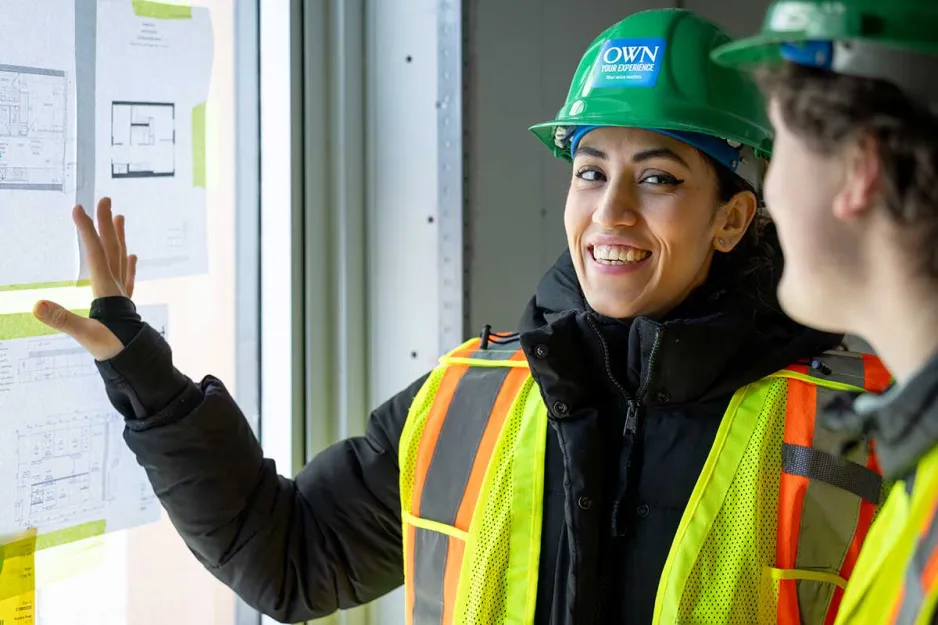
At a polytechnic, learning extends beyond the classroom. You might put your skills to work during a co-op or placement, practice in a simulated work environment, tackle a real industry problem, or contribute to applied research. Experiential learning at George Brown can include everything from capstone projects and interactive simulations to work-integrated learning.
“What sets a polytechnic education apart is how theory is integrated with practice. Students learn the knowledge and skills behind their field, then apply that learning in labs, projects, simulations, and industry experiences that reflect real workplace challenges,” said Dr. Adel Esayed, Dean of the Faculty of Applied Science, Construction and Engineering Technologies.
"Our graduates develop technical expertise, along with adaptability, problem-solving skills, and professional confidence needed to succeed in rapidly evolving industries.”
Industry also shapes what you learn. Employers and industry partners contribute their expertise to programs, helping students develop skills that reflect what’s happening in their field and what employers value.
Is a polytechnic a college or a university?
A polytechnic doesn’t fit neatly into either category. Polytechnics combine the career-focused, practical learning often associated with colleges with a broad range of credentials and pathways, including degrees.
At George Brown, you can earn certificates, diplomas, advanced diplomas, graduate certificates, bachelor’s degrees, and master’s degrees. Use our Program Finder to explore programs by subject, credential, and other options.
Having that range gives you more ways to build on your education. You might start with one credential, enter the workforce, and return to school later as your goals and career evolve.
In other words, what you choose to study now doesn’t have to dictate exactly where you’ll be 10 years from now. And if you’re still figuring out where your interests could lead, Career Coach can help you explore career paths and related George Brown programs.
What does being a polytechnic mean at George Brown?
George Brown officially became George Brown Polytechnic in 2025, but our connection to polytechnic education goes back more than two decades. We’ve been a member of Polytechnics Canada since 2003.
That focus comes through across approximately 200 programs in fields including business, health sciences, design, culinary arts, construction, and skilled trades. Our downtown Toronto campuses also put students close to employers, with opportunities to make industry connections and take part in work-integrated learning while they study.
Experience it for yourself. Register for our Open House
Want to get a better sense of what George Brown is actually like?
Join us at our Open House on Saturday, Oct. 24, from 10 a.m. to 2 p.m. to learn about programs, tour our spaces, and get your questions answered.
Can’t make it in person? Take a virtual tour to check out our labs, classrooms, and other learning spaces online.