

George Brown Polytechnic is located on the traditional territory of the Mississaugas of the Credit First Nation and other Indigenous peoples who have lived here over time. We are grateful to share this land as treaty people who learn, work and live in the community with each other.
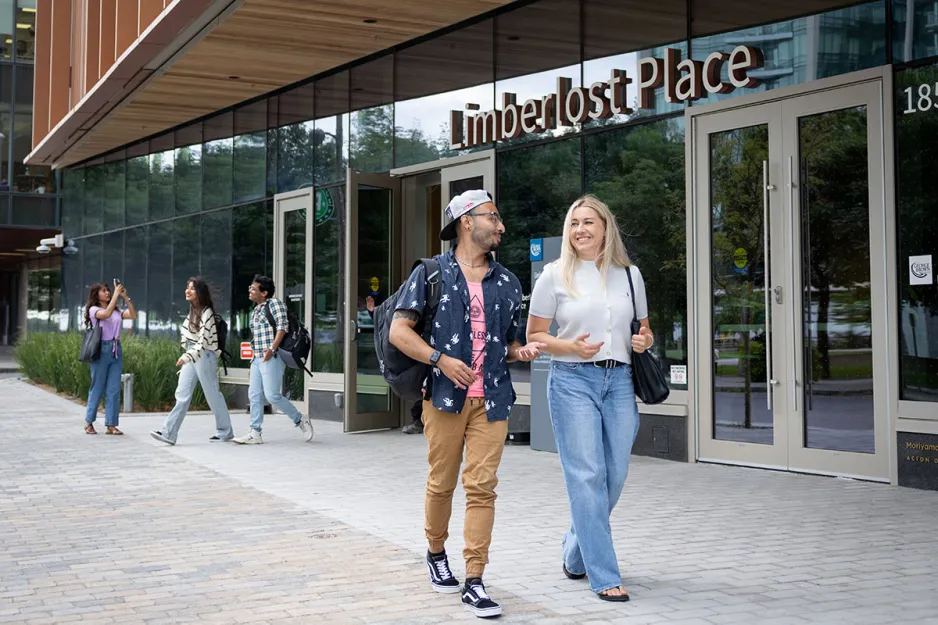
Reducing our impact on the environment and developing cleaner, greener ways of operating are core to who we are. Environmental sustainability is one of our institutional values and strategic priorities, and our efforts are grounded in equity and inclusion.
Our mass-timber building at Waterfront Campus, Limberlost Place, is a great example of our commitment. It's the first institutional building of its kind in Ontario, outfitted with systems that harness the surrounding environment, prioritize fresh air and natural light, and constructed with sustainable materials. Limberlost was designed with learners' well-being in mind and welcomed students for classes in September 2025.
And our new Master of Construction Management program will integrate environmental stewardship, low-carbon practices, and innovative technologies to train the next generation of green building leaders.
Our Collective Accomplishments
When it comes to taking climate action, we have a lot to be proud of. George Brown students and employees are advancing exciting initiatives that save energy, conserve water, reduce waste, and educate people about the disproportionate impacts of climate change and pollution on Indigenous, racialized and marginalized communities in Canada and around the world.
These efforts provide students with practical, real-world experience solving real-world problems to make a lasting impact by utilizing circular practices and upcycling, promoting waste diversion, and embracing environmental and social responsibility.
Environmental sustainability recognitions
We are very proud of the recognitions we have received for environmental sustainability, including the following:
Gold Organic Campus certification (maintained since 2023)
Fair Trade Campus (2025)
Green Will Initiative Collaborator (2025, City of Toronto)
Check out some of our key accomplishments from the past year. There are many initiatives across George Brown that focus on environmental sustainability, and this list represents a selection of the incredible work happening every day. Connect with the Sustainability Team at sustainability@georgebrown.ca.
Academics & research
We advanced sustainability through applied learning, industry‑engaged research, and student‑driven solutions.
Waste reduction & circular food systems
- Chef School students from the Honours Bachelor of Food Studies program conducted waste audits and provided recommendations about how to better manage waste in labs.
- Long‑term partnerships upcycled food waste, including citrus peels transformed into Citronino liqueur for Reid's Distillery, and organic waste converted into animal feed and composting inputs.
- Students transformed surplus ingredients from culinary labs into thousands of meals for fellow students, delivered by the Student Association's Student Nutrition Assistance Program, SNAP. We delivered more than 3,000 meals in the 2025/26 academic year.
Clean tech & climate-focused innovation
- Research projects supported hydrogen‑powered refrigeration, smart stormwater management, AI‑driven composting, and automated agri‑food waste upcycling.
- Advanced Manufacturing & Prototyping Labs partnered with industry to improve robotics safety, efficiency, and global certification readiness, supporting sustainable manufacturing.
Experiential learning
More than 250 students participated in the development of the Citronino product, gaining real‑world skills while delivering measurable environmental outcomes.
Operations
Operational initiatives delivered measurable impacts across waste diversion and energy efficiency at the polytechnic.
Waste diversion & reuse
- 17.9 tonnes of PPE were diverted from landfill over two years through recycling programs in our dental and nursing schools.
- Textile diversion in the School of Fashion expanded through external processing partnerships.
- Reusable food container programs kept thousands of single‑use packages out of landfills.
- AI‑enabled recycling assistants at Limberlost Place improved waste education and tracking with 10,000+ user interactions.
Energy & climate leadership
- Limberlost Place opened as a net‑zero, mass‑timber building, influencing provincial and national building codes.
- We implemented real‑time energy monitoring across major campus buildings.
- Energy audits and upcoming HVAC and chiller upgrades are reducing peak demand and overall consumption.
- AI‑based energy modelling identified operational changes that generated $27,000 in annualized electricity savings at 200 King St E.
External recognition
George Brown received City of Toronto Green Will Initiative Collaborator recognition, reflecting leadership in emissions reduction and efficiency efforts.
Engagement

Engagement initiatives strengthened awareness, equity, and participation across the George Brown community.
Learning & dialogue
Sustainability Learning Series events addressed environmental justice, climate impacts, and career pathways in sustainability, featuring community leaders and professionals.
Student & employee participation
- Campus‑wide activities, such as Stop Food Waste Days (March 2025), brought together students, food services, and sustainability teams to showcase practical waste‑reduction solutions.
- Extensive surveys and interviews engaged students, staff, faculty, alumni,to shape sustainability priorities.
Student leadership
Student leadership in sustainability grew in scale and impact.
- Sustainability‑focused student clubs were formally registered with the Student Association.
- A Sustainability Ambassadors program expanded to 58 students, empowering peer‑to‑peer leadership across campuses.
Student voice & influence
- Nearly 400 students participated in a Sustainability Plan survey, clearly identifying operations, culture change, and leadership development as top priorities.
- Student input directly informed sustainability visioning, materiality assessment, and future planning.
Governance & strategy

Foundational governance work strengthened accountability and long‑term impact.
Policy & planning
- George Brown refreshed its institutional values to include sustainability.
- A new Sustainability Plan was drafted, aligned with the UN Sustainable Development Goals (SDGs), the Anti‑Racism Action Plan, and Indigenous Education Strategy.
- Senior leaders participated in visioning and prioritization workshops to inform institution‑wide sustainability goals.
Energy governance
The Energy Conservation and Demand Management (ECDM) Plan and Integrated Energy and Water Master Plan (IEWMP) established a regulatory‑compliant framework for long‑term energy efficiency and emissions reduction.