

George Brown Polytechnic is located on the traditional territory of the Mississaugas of the Credit First Nation and other Indigenous peoples who have lived here over time. We are grateful to share this land as treaty people who learn, work and live in the community with each other.
An exciting change is underway at George Brown Polytechnic. In February 2026, we will name our Chef School atrium in honour of William Peyton Hubbard, a visionary leader who championed equity, inclusion, and innovation. In the lead-up to this event, we invite the George Brown community to learn more about Hubbard’s legacy and accomplishments.
The upcoming naming of our Chef School atrium is an opportunity for us to mark an important milestone together.
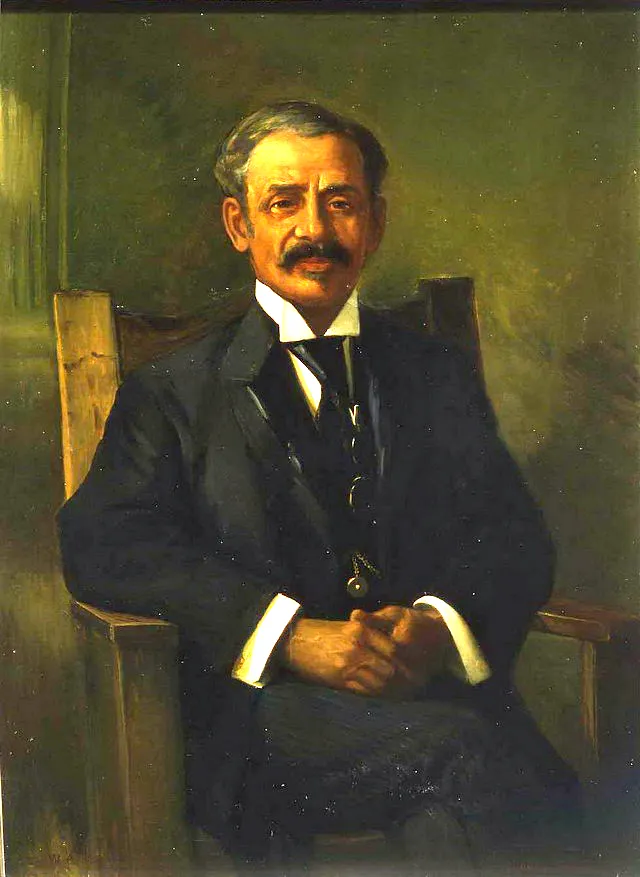
In February, a landmark community space at George Brown Polytechnic will enter a new era. The Chef School is renaming its atrium at 300 Adelaide St. E. in honour of William Peyton Hubbard, (1842-1935), abolitionist, inventor, businessman, politician and friend of George Brown. The naming will be commemorated at an event on February 5, kicking off George Brown’s Black Futures Month celebrations.
“The Chef School Atrium, a space for learning and community, is a fitting tribute to William Peyton Hubbard. As a baker, inventor, and civic leader, his work advanced innovation, fairness, accountability, and equity,” said George Brown Polytechnic President Dr. Gervan Fearon. “Naming this space after him is a significant recognition of his contributions and promotion of an inclusive Toronto and, indeed, Canada. It also symbolizes our commitment to equity and allyship and serves as a beacon to the George Brown community and others to carry his legacy forward.”
Hubbard’s connection to the Chef School reflects George Brown’s broader legacy of embedding equity, innovation, and public purpose into its academic and community spaces. A trained baker who specialized in cakes, Hubbard’s most enduring legacy in the baking and culinary arts was his creation of the Hubbard Portable Oven, an innovation that helped to revolutionize commercial kitchens. Described during its time as being practically “fire proof,” the Hubbard Portable Oven offered cooks an alternative to the traditional brick oven as a much smaller option that could be used in a wider variety of spaces, including commercial kitchens like those of hotels where multiple ovens were necessary. Hubbard’s brothers catapulted the innovation throughout kitchens around North America with the creation of the Hubbard Portable Oven Company, which had offices in Toronto and New York City.
For Dr. Ana Rita Morais, Dean, Faculty of Business, Creative Industries and Culinary Arts at George Brown, the connection between Hubbard’s personal sense of innovation and the curriculum at the George Brown Chef School is a perfect fit.
“We are known for rigorous, hands-on culinary and baking education, and Hubbard’s own innovations in baking technology connect directly to that spirit of experimentation and problem-solving in the kitchen,” Dr. Morais explains. “Our labs and classrooms are where students test ideas, work through failure, and push the future of food forward. Having those spaces carry his name roots that innovation in a local legacy that belongs to Toronto.”
Hubbard’s influence extended well beyond his contributions to baking and invention. In his mid-thirties, he began working as a horse-drawn cab driver in his uncle’s livery business. During this period, he developed a relationship with George Brown through ongoing conversation and exposure to public affairs, and Brown encouraged Hubbard to consider municipal politics. Hubbard later entered public life on his own terms, ultimately serving as acting mayor of Toronto and advocating for fairness and accountability, including for the city’s Chinese and Jewish communities.
“Hubbard demonstrated exceptional intelligence, ingenuity, innovation and resilience,” adds Jennifer Grant, George Brown’s Associate Vice-President of the Office of Anti-Racism, Equity and Human Rights Services.
“His life exemplifies not only George Brown’s core values, but our hope of what students can achieve when access, education, and opportunity align. Living during a time marked by explicit racial exclusion and profound prejudice, Hubbard’s story offers us insight into what is possible when barriers are challenged, and talent is recognized and supported. Through his invention of the Hubbard Portable Oven and creation of an enterprise that transformed the industry, and later with his entry into politics, Hubbard’s significant contribution to industry and civic life helped to shape of Toronto.”
There is an immense sense of pride in bringing Hubbard’s legacy forth to prominence for the next generation of culinary experts.
“To know that a new generation of chefs, bakers and hospitality professionals will learn their craft under the name of a Black Torontonian who broke barriers and served this city at the highest levels of public office, there’s a profound responsibility and pride in that,” Dr. Morais says.
This special event happens Thursday, February 5, 2026, 4:30 – 7 p.m. at the Chef School atrium at 300 Adelaide St. E. George Brown leaders will deliver remarks, a spoken word poet will perform, and new signage and a plaque will be officially unveiled. Registration is required.
Related: