
George Brown Polytechnic is located on the traditional territory of the Mississaugas of the Credit First Nation and other Indigenous peoples who have lived here over time. We are grateful to share this land as treaty people who learn, work and live in the community with each other.
In a conference that has focused on reframing togetherness, a panel of current George Brown College students and alumni demonstrated a bright future of positive yet critical thinking through global perspectives informed by ancient teaching.
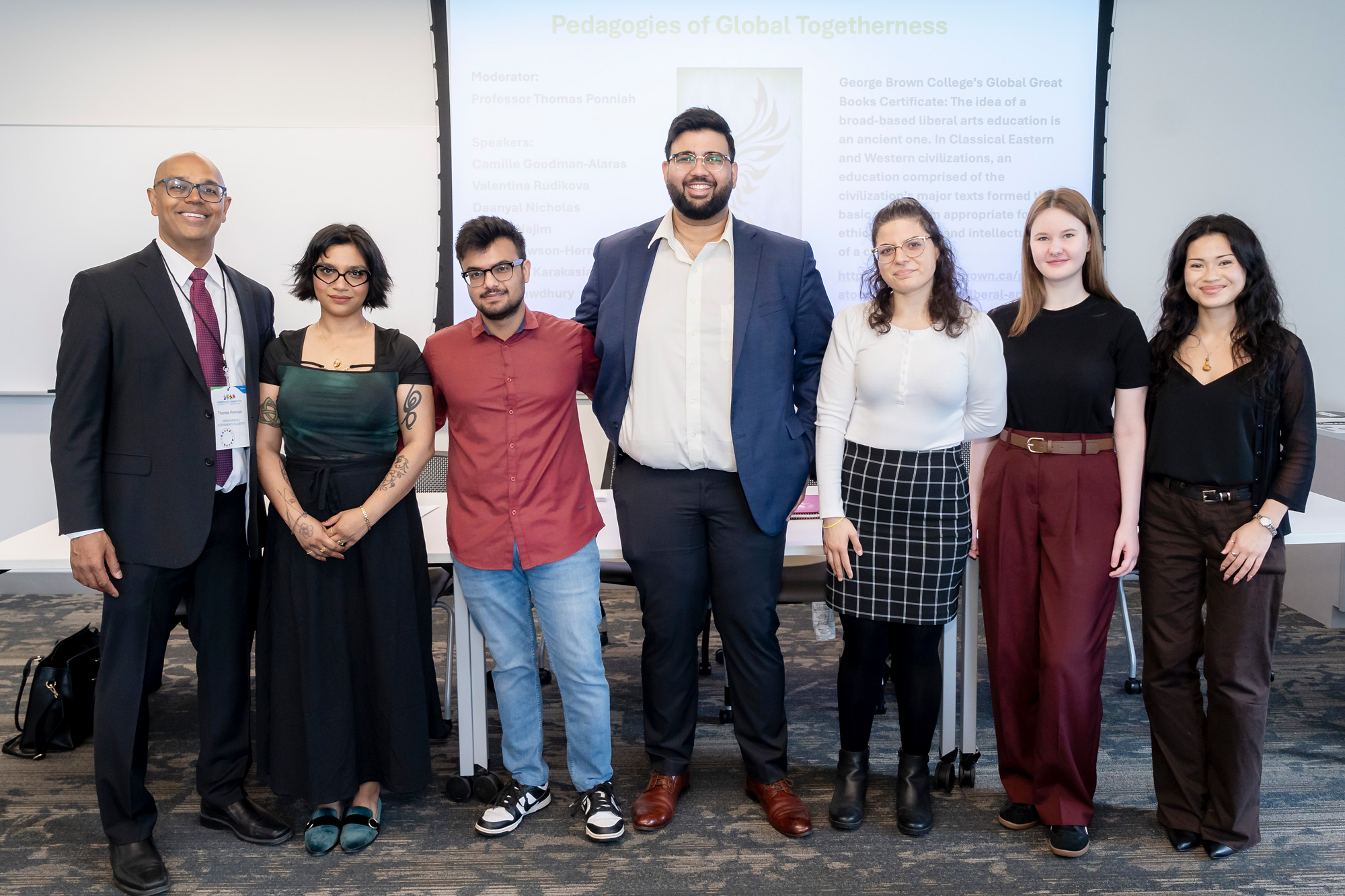
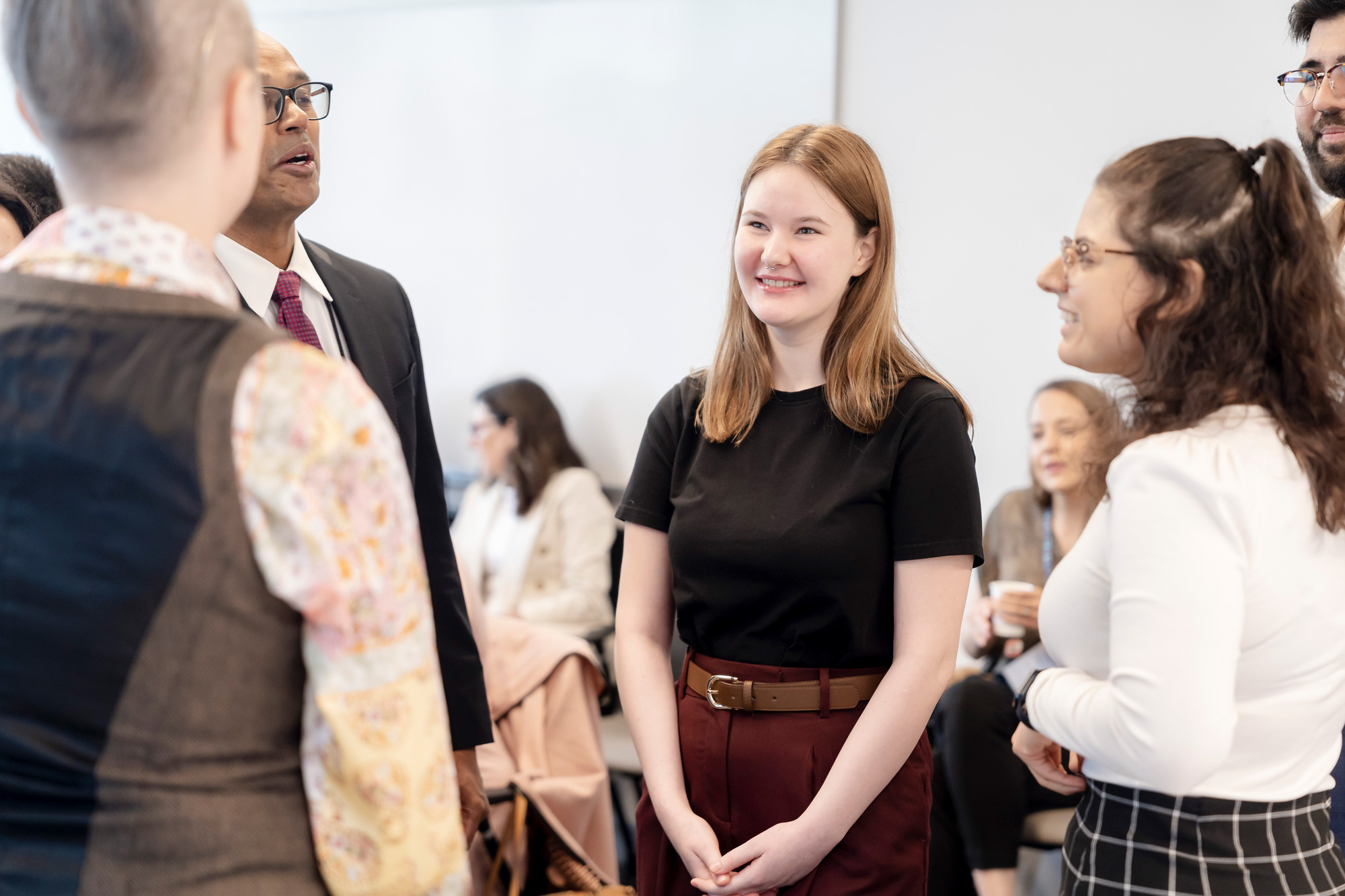
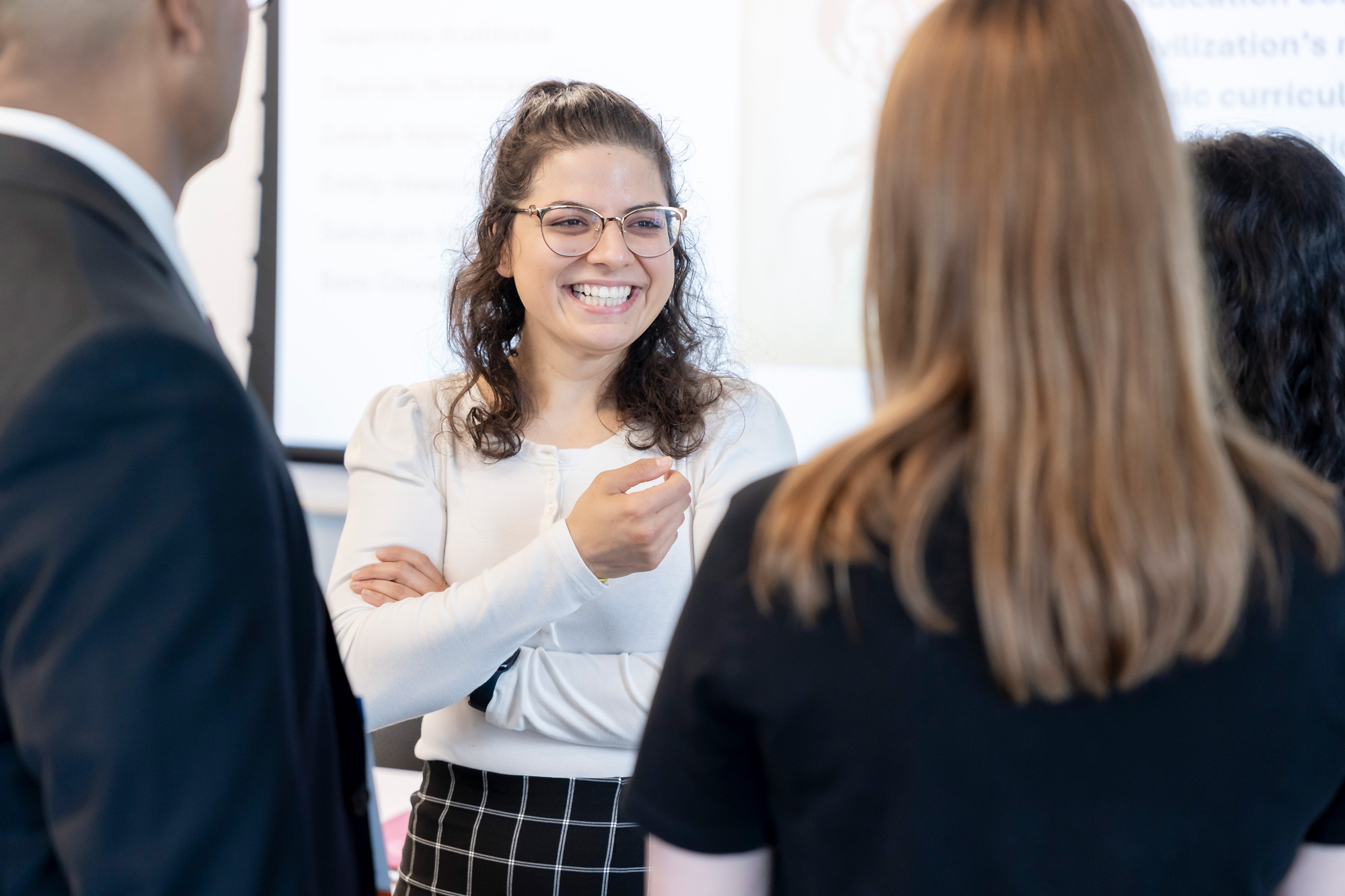
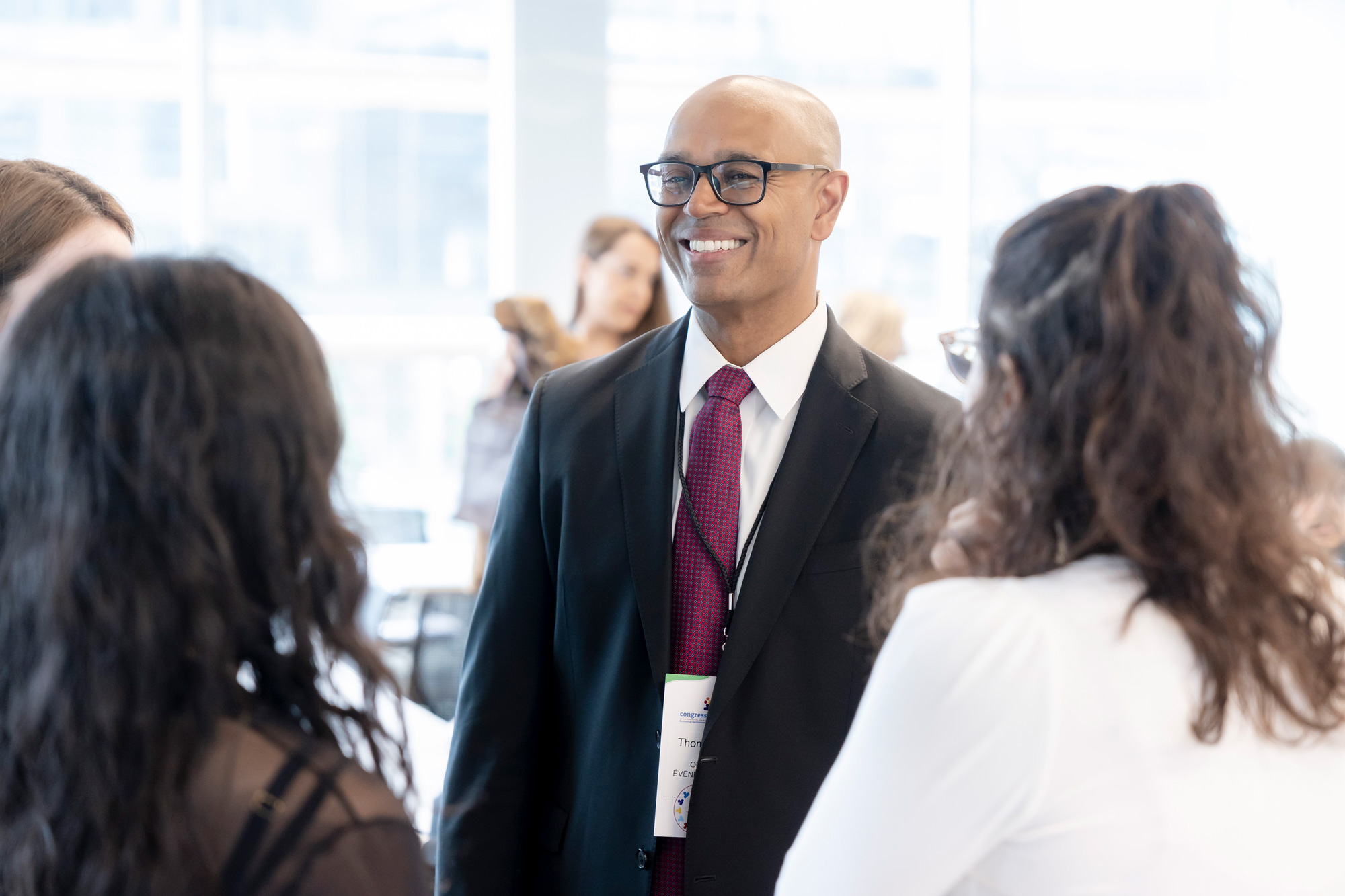
As part of the 94th Congress of Humanities and Social Sciences, the panel “Pedagogies of Global Togetherness” was comprised of students who are participating in or completed the Global Great Books Certificate courses from the School of Liberal Arts & Sciences: Camille Goodman-Alaras, Valentina Rudikova, Daanyal Nicholas, Zakiya Najim, Saksham Karakasia, and Sara Chowdhury, moderated by professor Thomas Ponniah, who created the certificate.
An invitation to think bigger and dig deeper
The panel focused on the importance of the course and related education as well as themes the students were particularly drawn to. Through intellectual and philosophical texts, this certificate inspires students to think bigger, find confidence, and seek out truth. To connect with themselves and then to others. Throughout the panel, the current world climate was referred to as both a challenge and inspiration for betterment. Through these big concepts, Dante’s Inferno, Plato’s The Symposium, and Ved Vyasa’s Mahabharata were referenced as texts that inspired students to look both inward and towards society for answers.
Goodman-Alaras, a 2024 graduate of the General Arts & Science program, presented on how these texts inspired her to discover an innate sense of love and identity and even to pursue learning yoga in India.
“I knew when I chose the course, it would elevate my life in many ways,” she said. “But I didn’t expect to come out with a deeper understanding of who I am and where I’m headed… these texts didn’t act as just paper for me, they stirred something inside of me. This course didn’t just teach me ideas, it brought me purpose. I leave this class not just with knowledge but with a compass, a sense of direction, a deeper calling to live with integrity and serve with heart.”
Prioritizing authentic human connection
Nicholas, who is a third-year nursing student in the collaborative program with Toronto Metropolitan University, explained how he gained valuable insight to the power of genuine human connection from The Symposium that will aid his work. In a role that often veers towards clinical detachment, he stressed that the text showed him how vulnerability can unite rather than isolate.
“I recognized the perpetual cycle of emotional peaks and valleys that define us,” he said. “Just as Pausanias’ vision transforms a mere dinner into a dynamic community of speakers, I stride to turn each interaction into its own symposium. A symposium of care, where I pause to honour the client’s fears and leave my own uncertainties and stay present through the emotional surge.”
Timeless concepts
Najim, also a nursing student, began her presentation with her fascination of representations of the various forms of love.
“Throughout the course, the examination of love was omnipresent,” she said. “I’ve seen love defined as what it is not, as something tangible, and even metaphysical. Through the readings with the professor and the collective pedagogy, I’ve found love is defined by the individual, the soul, and the spirit.”
This led her to draw parallels between ancient philosopher Plato and modern artist Kendrick Lamar, emphasizing how both focused on choosing love and letting go of pride and ego.
“Kendrick conceptualizes this definition in his work. His music is his reflection of his human experience of love. Love for himself, others, his passion, and his artistry. It’s not only the idea of what love builds, but the consequences of its destruction that connects Kendrick’s work to the teachings of ancient thinkers. This course has helped me understand not only how humans have come together over time, but concurrently, how they destroy themselves.”
Voices of the future
Dr. Eileen De Courcy, the college’s Vice-President, Academic, was visibly impressed through the entire panel’s presentations, and shared how important it is that the teachings of the past are influencing the future.
“We are in the presence of the next generation of global great thinkers,” she shared with the room. “Being at such a young age and thinking so deeply gives me great hope that the world will be okay with you as leaders. Clearly this has been incredibly impactful both personally and also professionally, and there’s great value to this kind of thinking of connectedness and who you are, where you belong in the world, and how you can make a difference… I am so delighted and full of joy to hear about your transformative learning experiences.”
Ending on a positive note, Chowdhury said “The entire Arts & Science program is very practical. It’s not something I’ve ever experienced. Teachers try to get to know their students. Success can be found for anyone and everyone. We’ve all been brought into a comforting zone, which public education doesn’t tend to do.”
Interested in this successful pairing of ancient thinking with modern considerations? Check out the Global Great Books Certificate. Those who complete the Global Great Books Certificate are eligible to apply for $500 in financial support through the Noella Milne Excellence Award.